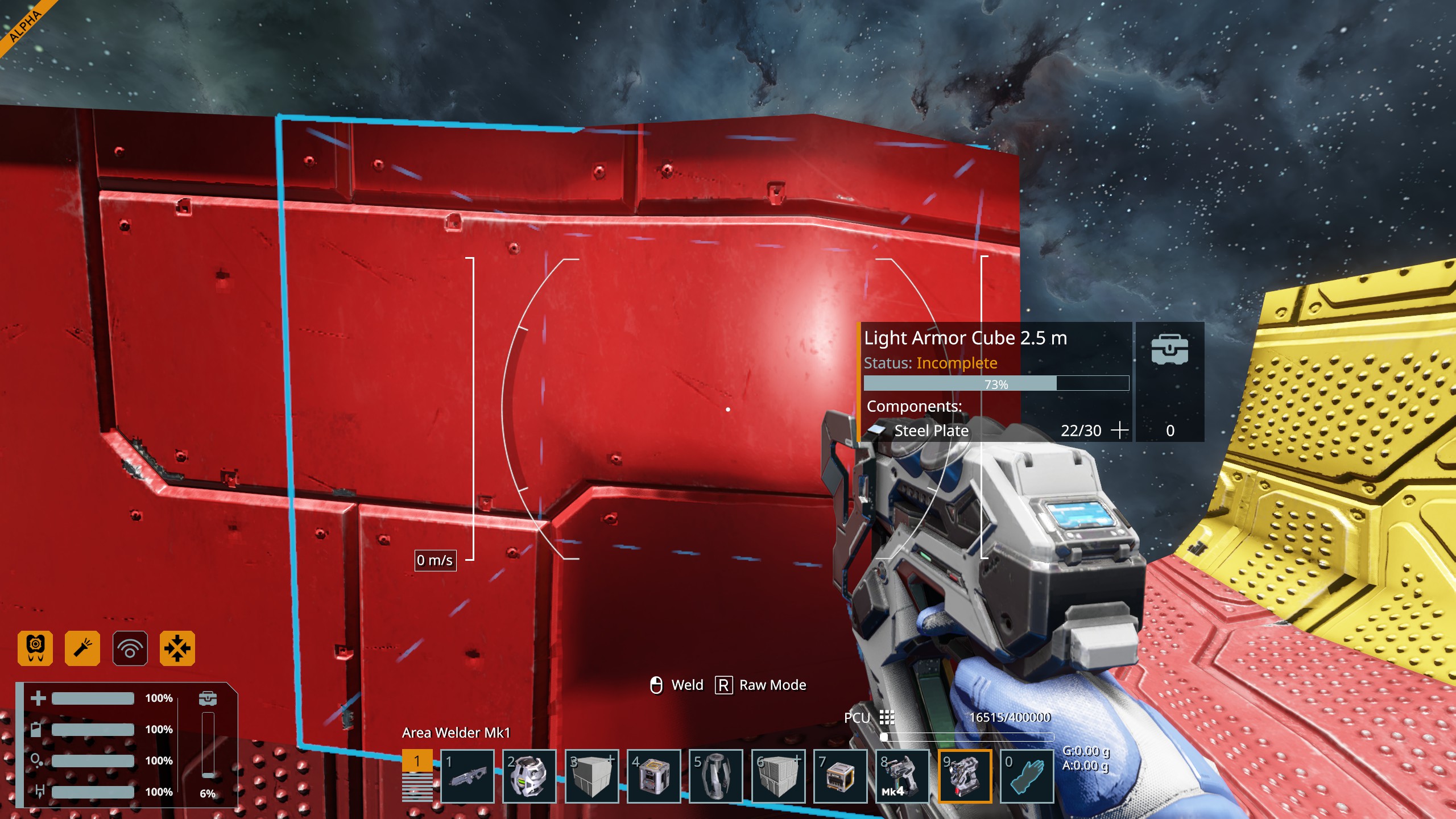
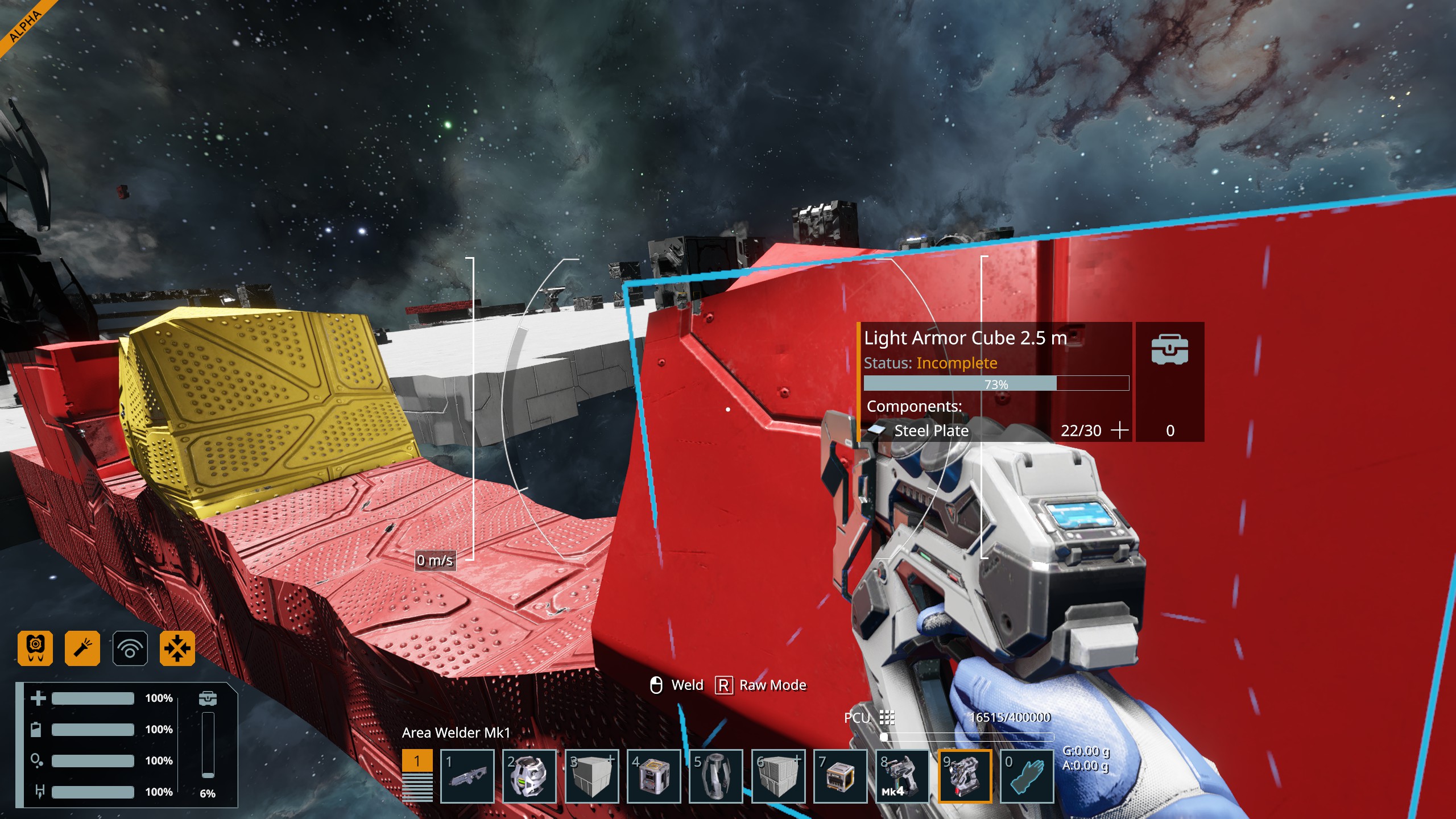
[Warheads/explosion mechanics] should be changed or reverted to how it was in SE1

Cpt_Mechu shared this feedback 21 days ago
Not Enough Votes

This is a repost of my comment on another feedback post, but with appropriate title, images and additional explanation. If the other topic gets enough votes i'll remove this one, otherwise its cool.

link: https://support.keenswh.com/spaceengineers2/pc/topic/54951-warheads-too-powerful

Explosions / warheads behave differently in SE2 compared to SE1 and i believe that SE1 has a better system game play wise.

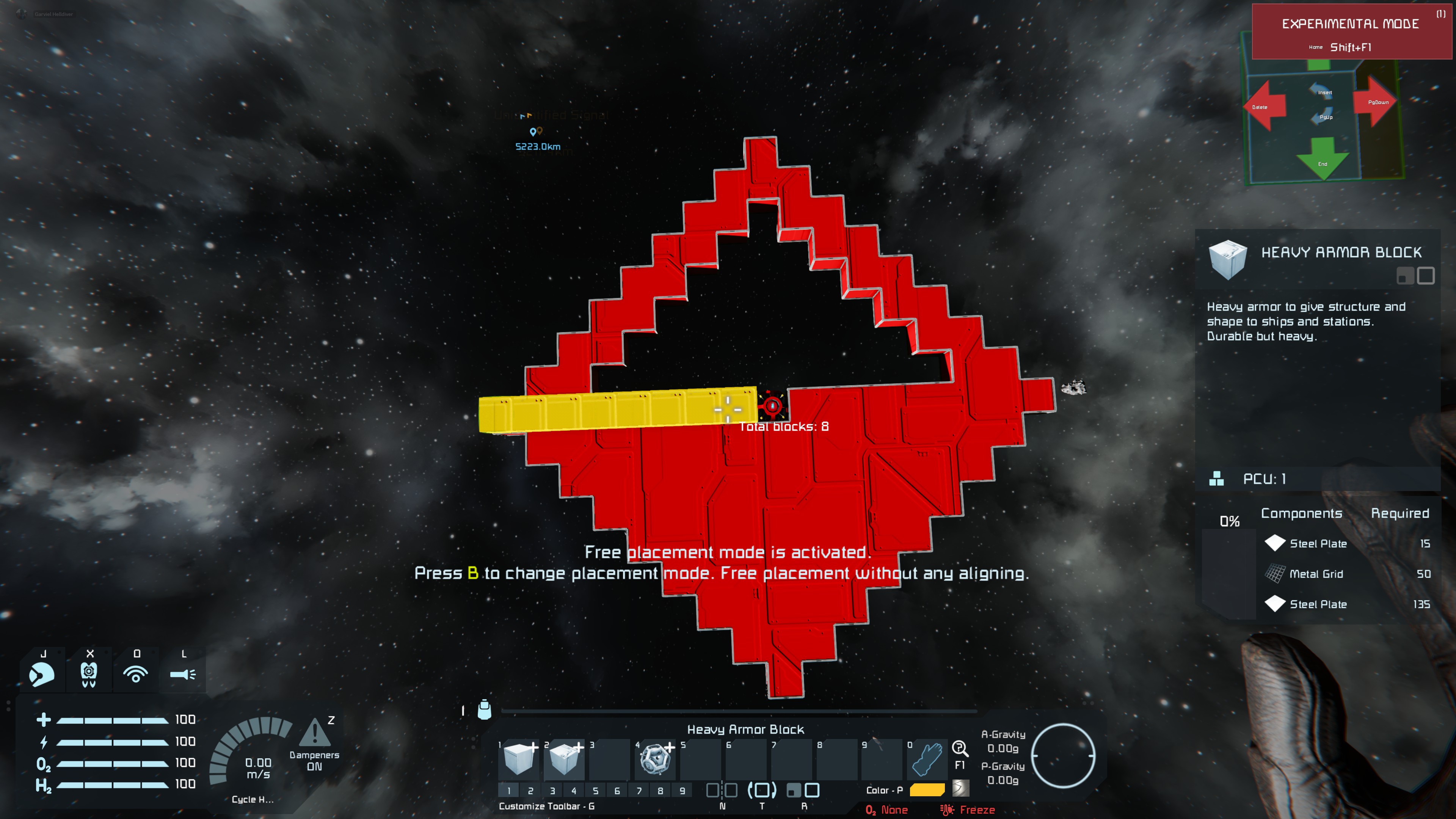
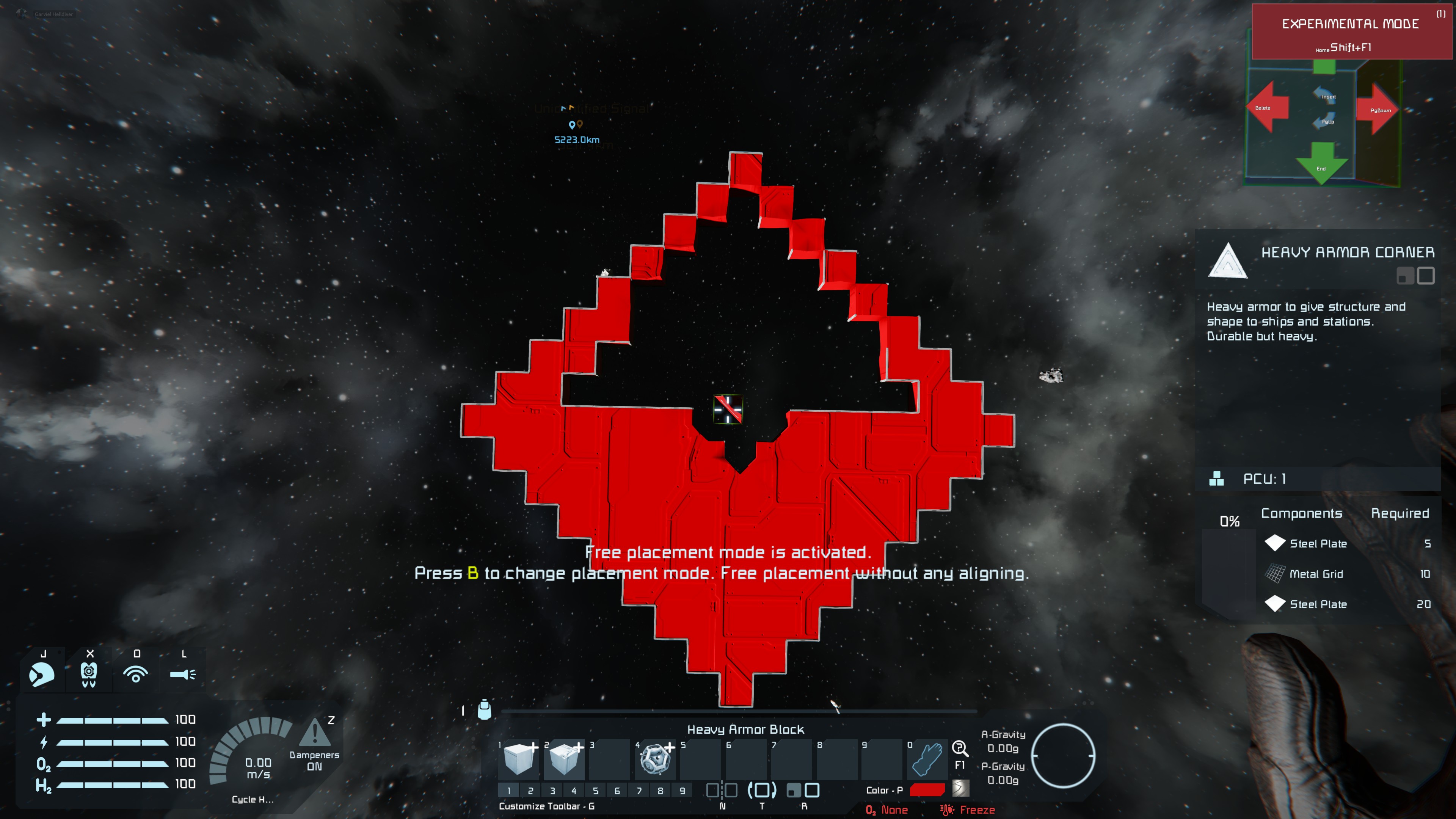
In SE2 warheads create AOE effect. Damage cannot be stopped, only distance matters (dmg fall off). Because of that 2.5 m warhead can destroy around 12.5m of heavy armor (in length) or if you surround it completely, 12.5m of heavy armor in any direction (around 500 to 1000 blocks).
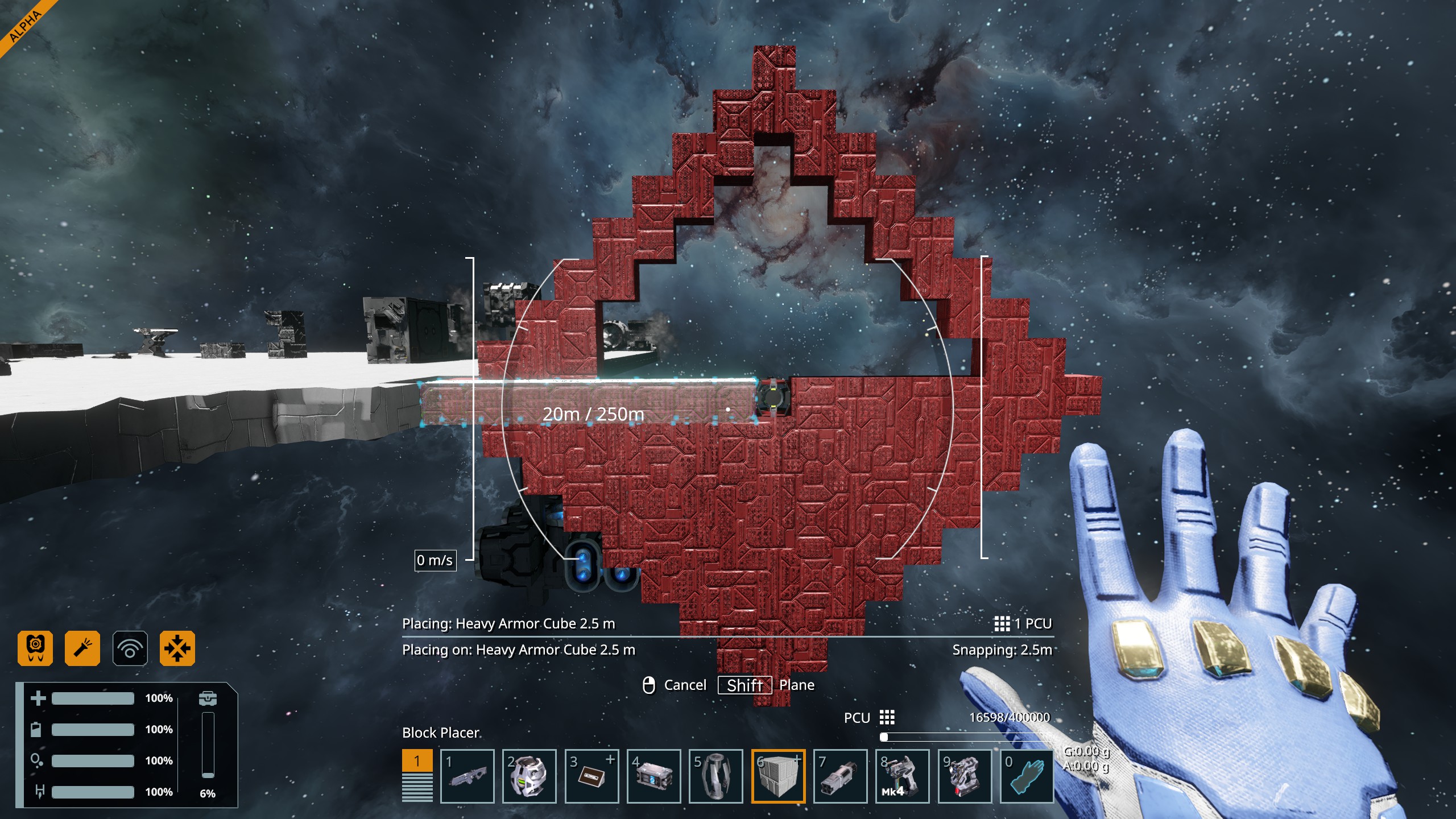
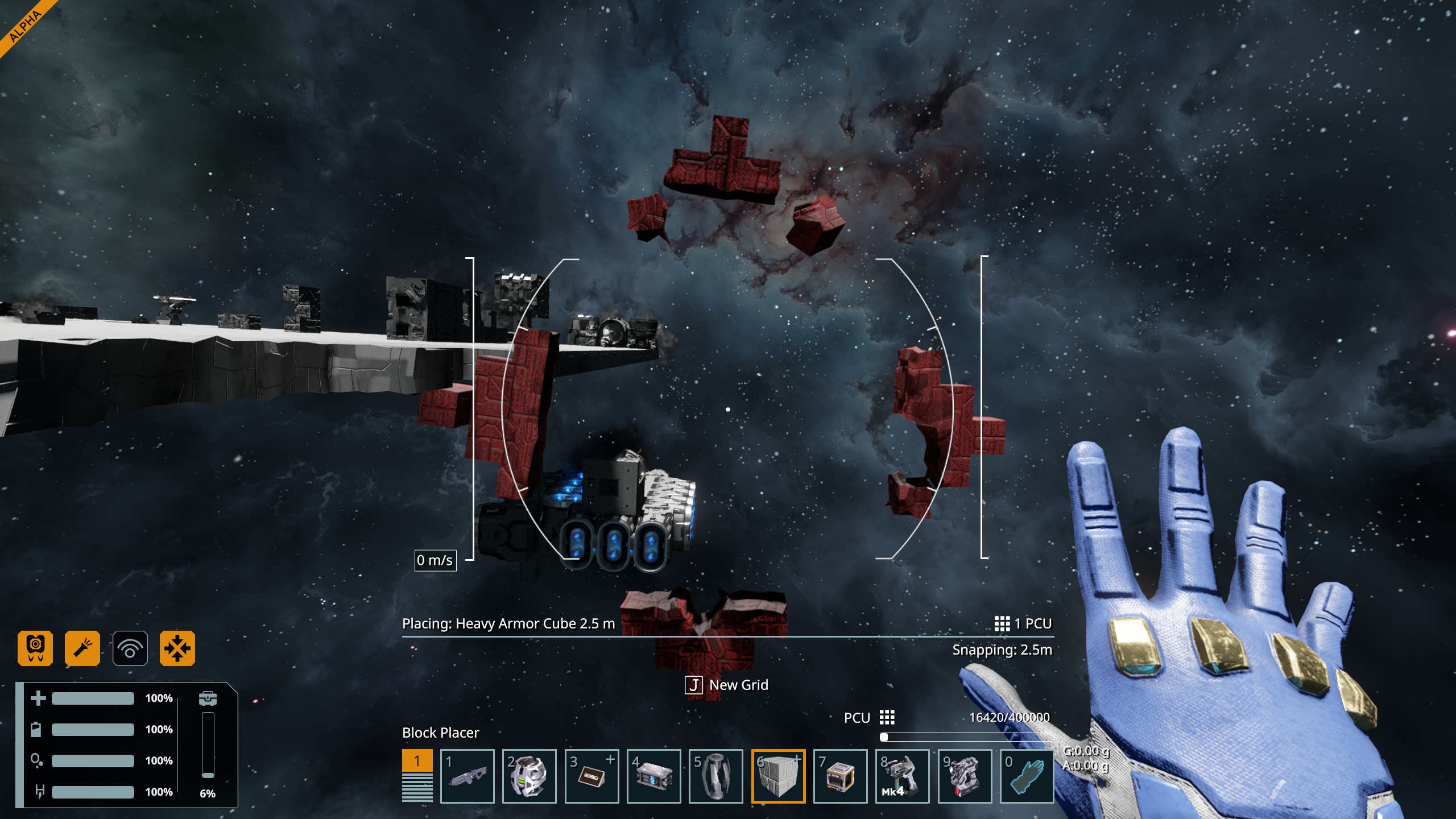
2d01a481541234a2717a0a5ecd27d71b

6b95ab85b05c455772dc4b29f920fb8e

(IMG 1 and 2 images showcase effective range of SE2 2.5m warhead against heavy armor)

In SE1 warheads don't have the same property, as damage can be blocked by armor. Even one layer of heavy armor is (barely) enough to dampen most damage from a large grid warhead.

This is because as stated by wiki.gg on explosions: "The explosion is volumetric for these and loses damage as it destroys blocks to get past until it runs out of damage."
48592a2b8de69cac9a46cb46eb4b92c8

55e30ef87c45ab46987a54d9cde47c95

IMG 7 and 8 (taken in SE1) show that damage can be stopped by armor, and effectively too.

Why change or revert?

- Explosions being treated as AOE makes them overpowered, a warhead in SE1 might destroy anywhere from several blocks to dozens of heavy armor blocks (depends on circumstances), in SE2 it can be hundreds.

- Reducing damage will probably not solve the issue, warheads will either be too weak or used to damage more fragile / critical inside components of ships like conveyors, storage blocks, hydrogen tanks, cockpits & players, (due to damage just phasing through blocks)
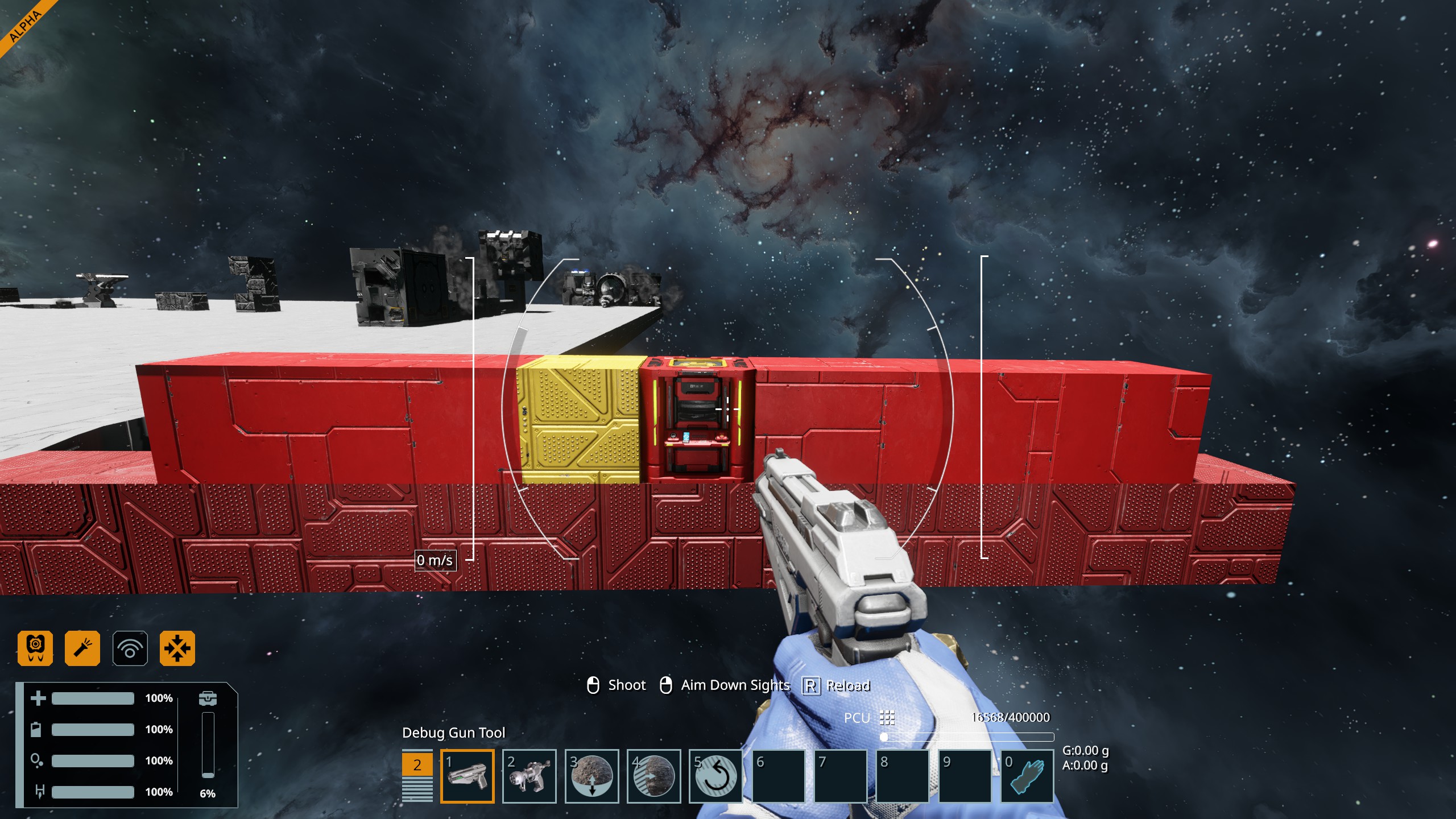
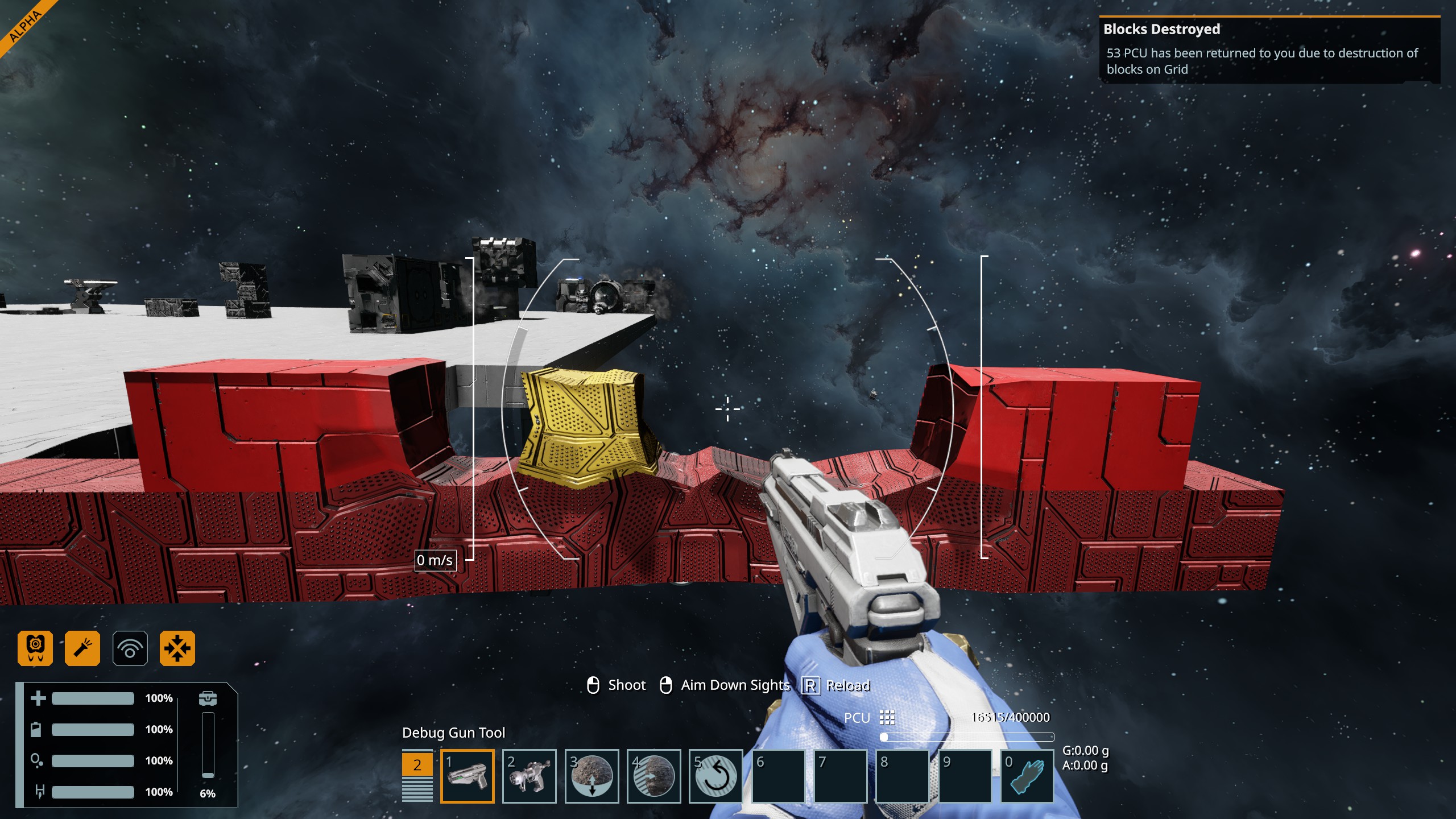
- reactors, hydrogen tanks, other explosive blocks and important delicate blocks are bigger liabilities then before, which may develop unwanted meta both for pvp and pve. (like turning off reactors during battle so they don't explode???) b04da4fd4b7185c60480a51f3816dbca
2642b1e008d50df635111cd80af07a69
98ae8850ea0ddc54a119a54bfe948939
a78f163e4a9e7c52f07f2588dea09004
Picture 3, 4, 5, 6 show that armor blocks will not defend your ship from internal explosions, ( yellow block is heavy armor, it does let damage through, resulting in the same damages on both sides)
- Only counter-play in terms of ARMOR is spaced armor.


Does every explosion need to be changed? (opinionSSSSSS)

Some explosions could stay as simple AOE (for reasons like optimization) (ex.: any rocket launchers), but damage fall off should maybe be calculated based on how much block hp is in between origin of explosion and max range of the explosion. ( the more hp, the faster the fall off)

This is all, thanks for reading through all that

~ a fellow engineer

Replies (4)

photo
2

I think every explosions should be volumetric and there could be different shape of explosions like shaped charges missiles and sphere shaped warheads. Also warheads should be stronger in athmosphere (or weaker in space) because explosions in vacuum don't have the shockwave but only radiation, heat and shrapnell.

photo
1

The volume of the area affected by an explosion is proportional to the mass of the charge.


An explosion of 1 kg of TNT (~4 MJ) is roughly equivalent to the kinetic energy of an 8-kg projectile traveling at a speed of 1,000 m/s or 14.5-kg projectile at 750 m/s

An 8-kg projectile corresponds roughly to a 75–85 mm caliber. Such a projectile contains an explosive charge of about 1-1,5-2 kg of TNT.

An 14.5-kg projectile corresponds roughly to a 105 mm caliber. Such a projectile contains an explosive charge of about 2-3,5 kg of TNT.

photo
1

In an atmospheric explosion, two distinct regions of the explosion’s effects can be clearly distinguished:

1) the fireball, which consists primarily of the explosion products of the explosive. Its maximum diameter is determined approximately by the pressure conditions on its surface, when the pressure of the explosion products equals the air pressure displaced by the products from the explosion volume (the pressure of the explosion products decreases as the radius of the fireball increases, while the air pressure on the surface of the fireball increases—this process occurs at hypersonic speeds 5->3 km/s)

2) When the expansion of the fireball stops, the shock wave (with a typical speed of ~1.5–2 km/s) separates from the “surface” of the fireball and travels through the air. The shock wave has a reliably lethal effect up to a distance of roughly three to six times the radius of the fireball.


It is essential to note that these processes occur in the atmosphere—not in a vacuum. In a vacuum, the expansion of the explosion’s products would continue unabated.

However, at the same time, the density of the gases forming the shock wave would decrease very rapidly.

I do not have a precise idea of the distance at which the dynamic effect of the explosion’s products would equal the dynamic effect of the shock wave in the atmosphere. But we probably won’t be far off if we estimate it to be two to three times the radius of the fireball in the atmosphere—that is, in a vacuum, the explosion will affect an area about half the radius of the area affected in the atmosphere.

photo
1

From the perspective of the experiments conducted by Cpt_Mechu, an important question arises:

How much explosive did the charge placed in the test wall contain?

If we do not know the actual mass of the explosive, we can assume that the explosive accounts for 50% of the block mass—this is a typical ratio for standard high-explosive aerial bombs from World War II. In artillery shells, the explosive accounts for roughly 20% of the mass.


To put it very simply, we can assume that 1 kg of TNT creates a fireball with a volume of 1 cubic meter in the atmosphere.

photo
1

Also damage fall off seems to be somewhat low, or maybe initial damage is very high and only after enough distance it starts to decrease to where difference in block hp starts to matter.

This means that Heavy armor is much weaker in SE2 than SE1


4ed71773d8ca77cc6f62f247d88fdaff

SE2 ^^^

VS - - - - - - Explosion on flat surface (yellow is light armor, red is heavy armor)

SE1 v v v

1c1a6c5826d4c986e8fea5338d59a0a6

photo
photo
1

The experiments here are great and very revealing.

photo
2

Oh i didn't see the similar topic.

I made mine : https://support.keenswh.com/spaceengineers2/pc/topic/55417-armor-blocs-dont-do-their-job

But it's roughtly the same thing : armor blocs are useless.

See the video...

https://streamable.com/7tvg3i

photo
1

Um... What were you trying to prove with this video?

Because it shows something that makes sense—if you surround a functional block with armor blocks, the functional block’s resistance to a direct attack won’t increase.

photo
2

I'm ok with This. But the blocs behind the armor block should be intact if the armor block is still there.

c6053ff2de39fc2bbf3d0e4410c8d315

8af322ab0d93c06e93b7995196c1f18e

photo
1

I understand that...

But if you want to assess the “protective capability” of an armor block, you have to proceed “systematically.”

- Build a wall of armor blocks

- Behind the wall, place a “row of test blocks” on a platform made of small blocks

- In front of the wall, place a small “target block” on a platform made of small blocks

The platform/console should ensure that the test blocks and the target block are not significantly affected by the foundation on which the wall of armor blocks stands.

Repair or rebuild the platform and the small “target block” after each shot.

This ensures that the rocket will always explode at the same distance and in the same spot relative to the wall of armor blocks. Ideally, you should fire from the same spot so that the rocket arrives from the same direction and at the same distance.

After each shot, check the condition of the armor blocks in the armor block wall and the test blocks behind the wall.

This way, you should be able to determine at what damage level the armor block stops protecting the test blocks behind the armor block wall.

I understand that this procedure is considerably more labor-intensive and time-consuming. But only through a systematic approach, in which every single shot and explosion takes place under approximately the same conditions, will you achieve a relevant result with any meaningful insight.

photo
1

Both mine and your tests have shown that armor can't protect other blocks from explosions, but currently its not the armor blocks that are at fault, but rather the explosion mechanics.

Warheads make simple AOE. Stuff inside it get damaged regardless of any walls, even if they had inf hp.

So in essence, keen should focus on how warheads [explosions] work, and interact with grids/blocks.

photo
1

Also as an addendum:

Explosions don't have to work exactly like in se1, as they are quite lag inducing. Some kind of compromise between simple aoe, and volumetric explosions could be reached to balance performance and more detailed explosion mechanics.

photo
1

One possible solution could be to "layer" several area-effect spheres on top of each other. The radii of the spheres and the severity of the damage would depend on the charge's mass.

This would add a bit of realism to the damage mechanism, but it doesn't solve the problem of protecting the blocks behind the armored block... Only a mechanism simulating the propagation of the blast shockwave would fix that. However, that is much more computationally intensive. On the other hand, it would be more realistic...


Although I wouldn’t completely rule out the area-of-effect mechanism either—it’s a pretty good mechanism applicable to explosive projectiles from small-caliber automatic weapons, say up to 50–60 mm, which contain only small explosive charges. The game would have to handle a large number of such projectiles—many times, even orders of magnitude more, than large projectiles and the warheads of guided missiles.

photo
1

What do you think i've made?

I don't test the rocket, i test the block that i fire onto.

If i shoot an inert bloc with rocket where they strike, the test blocks are safe. Even if i shoot closer.

The system is made to test the radius of explosion of one specific bloc (IE: empty H2 tank do 0 damage even à 0.25m, even if fired with a rocket)

[quote]Only a mechanism simulating the propagation of the blast shockwave would fix that.[/quote]

SE1 do it. With a distance damage fall off and even further : flying blocs that are not in destructive radius but close enough are blown away (yes i tested it too)

So Why SE2 can't?

On the vid it was a nuclear reactor.

photo
Leave a Comment
 
Attach a file
You can't vote. Please authorize!