


[Warheads/explosion mechanics] should be changed or reverted to how it was in SE1
This is a repost of my comment on another feedback post, but with appropriate title, images and additional explanation. If the other topic gets enough votes i'll remove this one, otherwise its cool.
link: https://support.keenswh.com/spaceengineers2/pc/topic/54951-warheads-too-powerful
Explosions / warheads behave differently in SE2 compared to SE1 and i believe that SE1 has a better system game play wise.
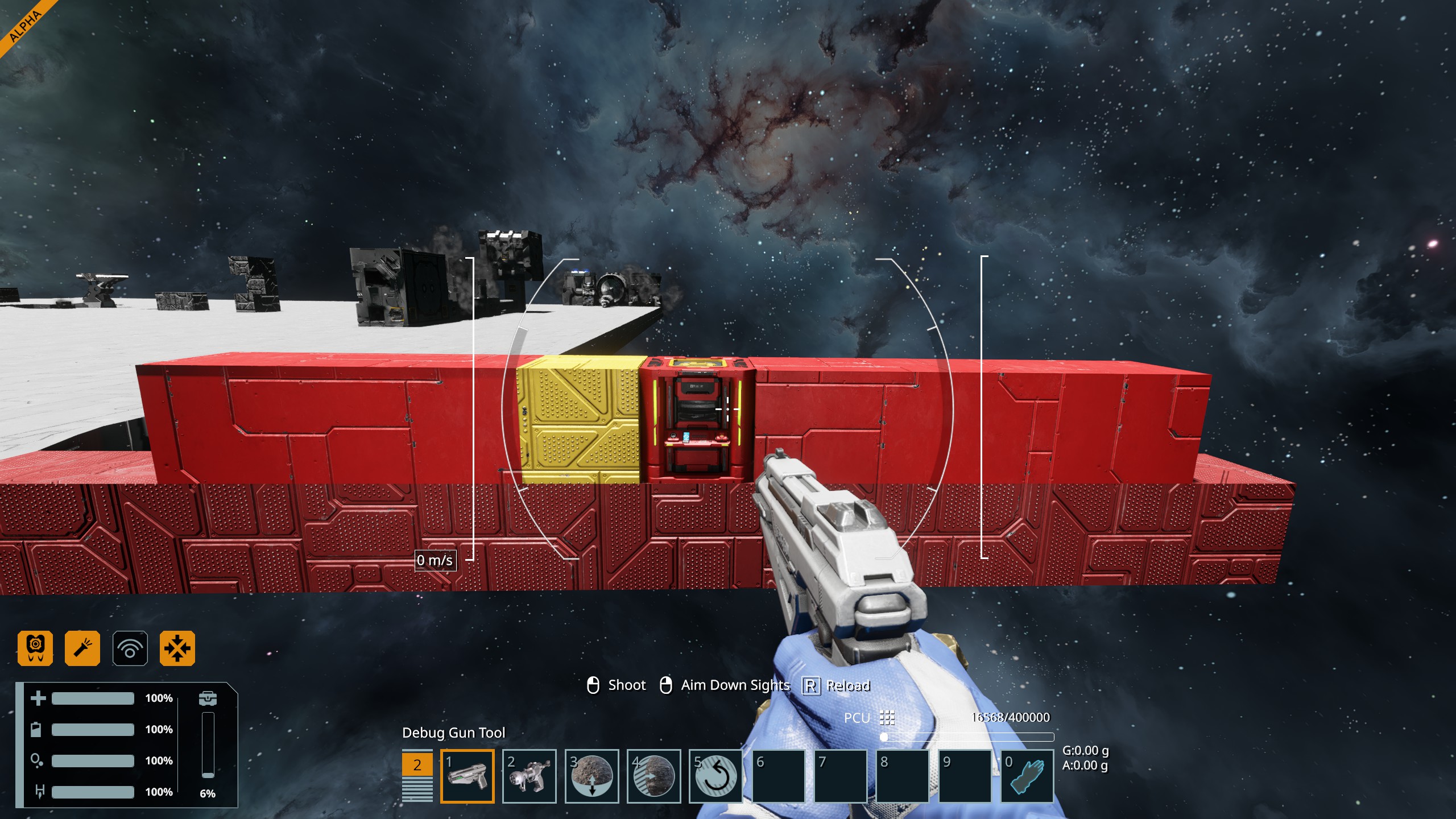
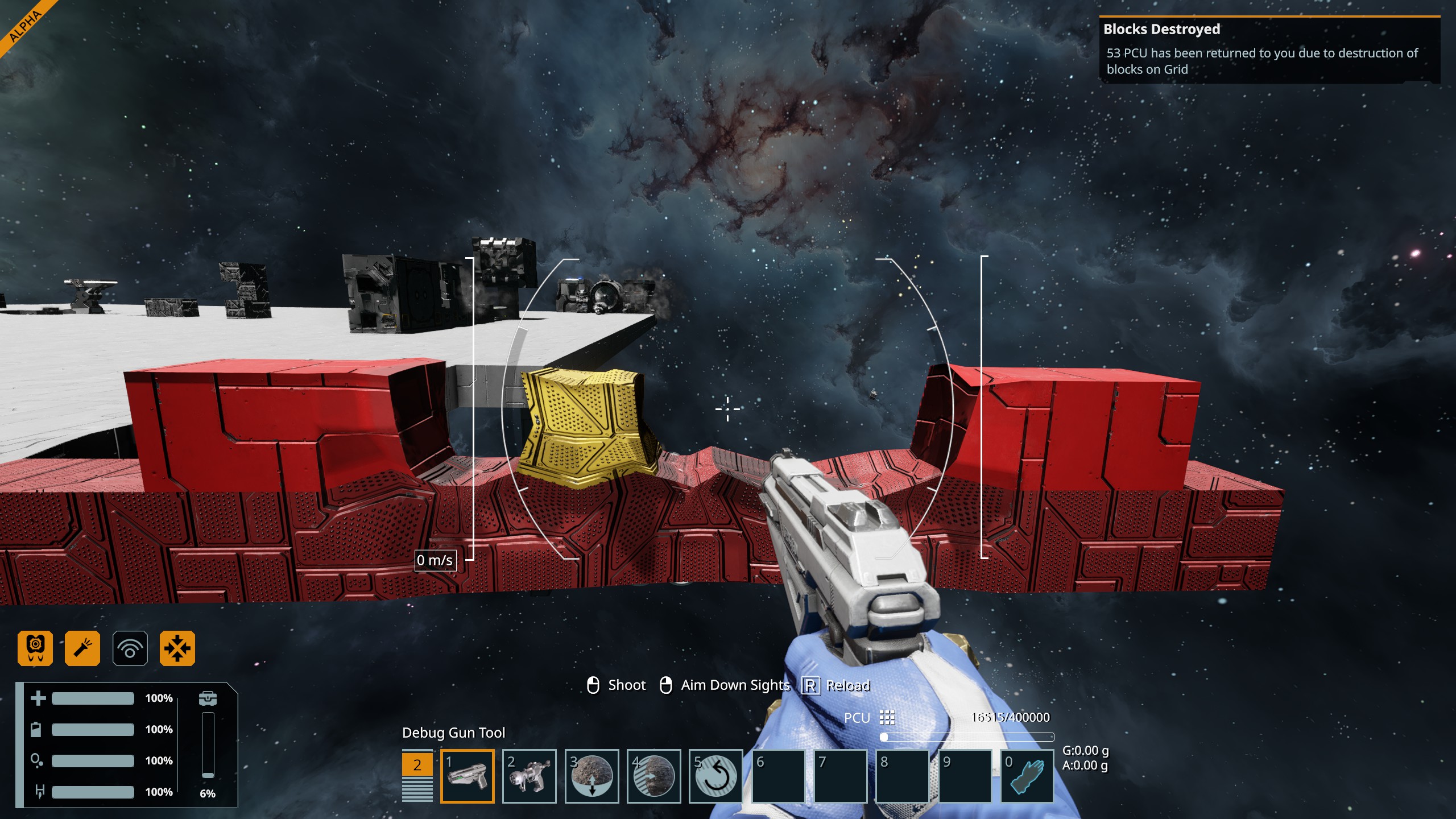
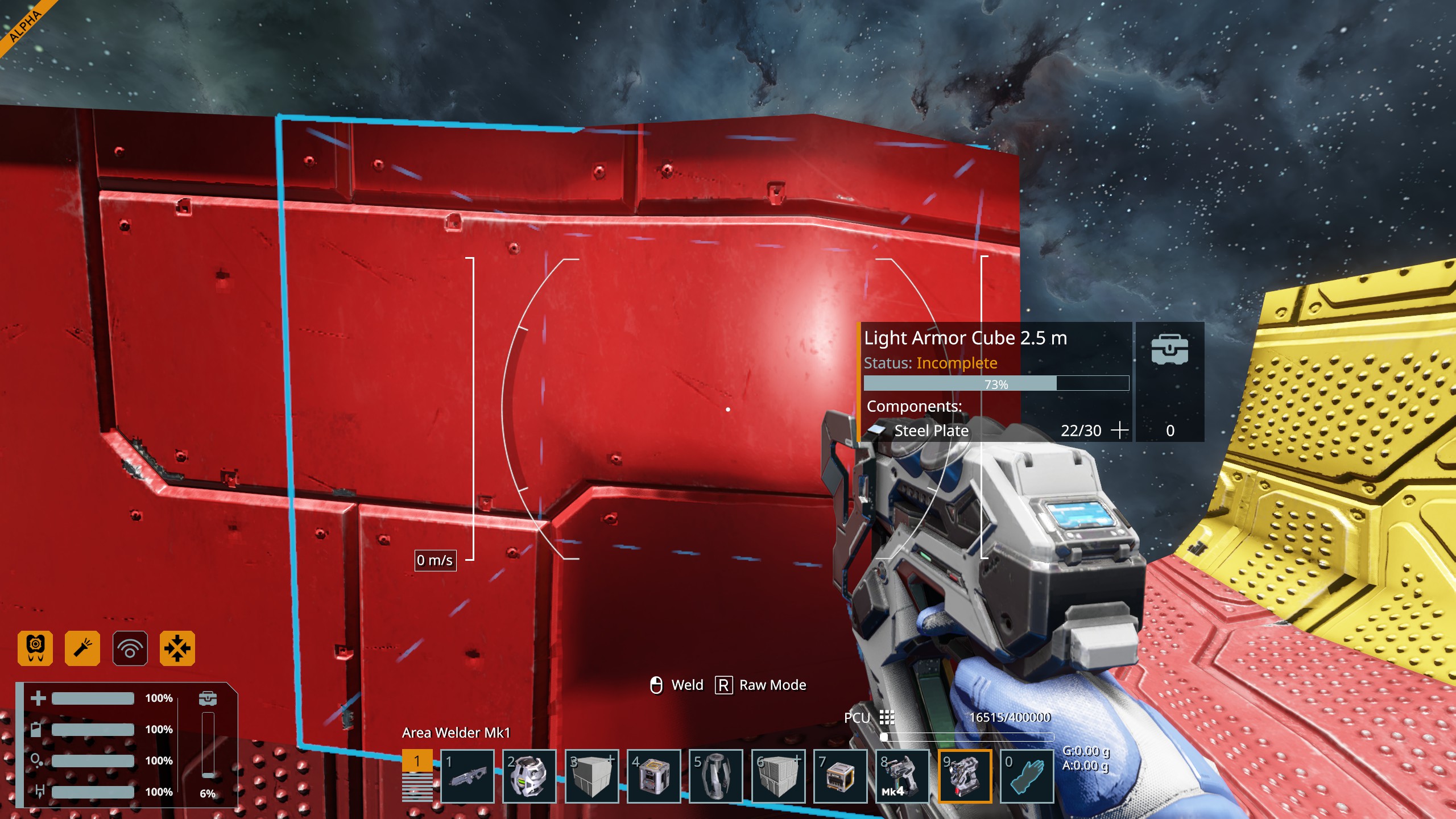
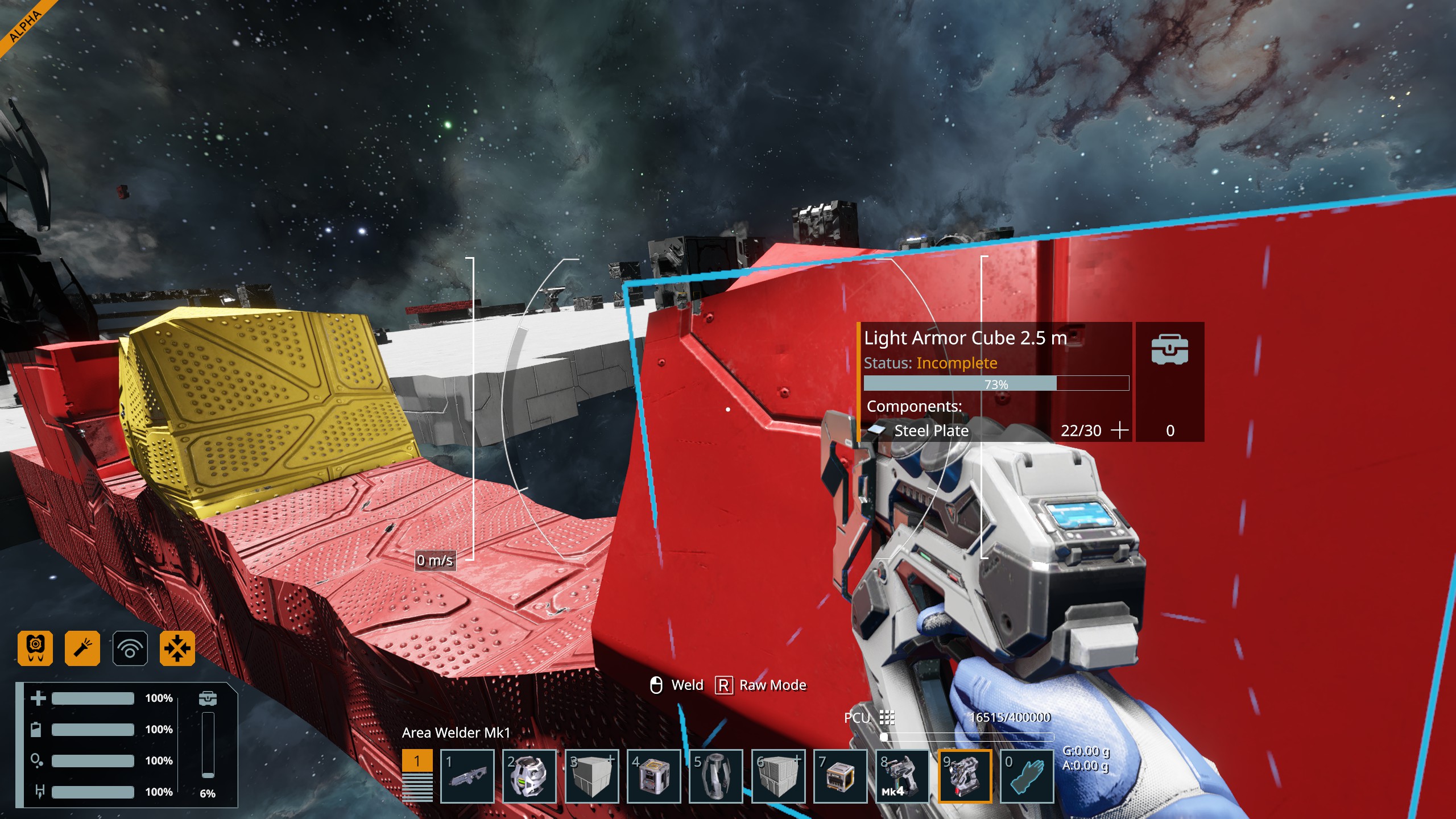
In SE2 warheads create AOE effect. Damage cannot be stopped, only distance matters (dmg fall off). Because of that 2.5 m warhead can destroy around 12.5m of heavy armor (in length) or if you surround it completely, 12.5m of heavy armor in any direction (around 500 to 1000 blocks).
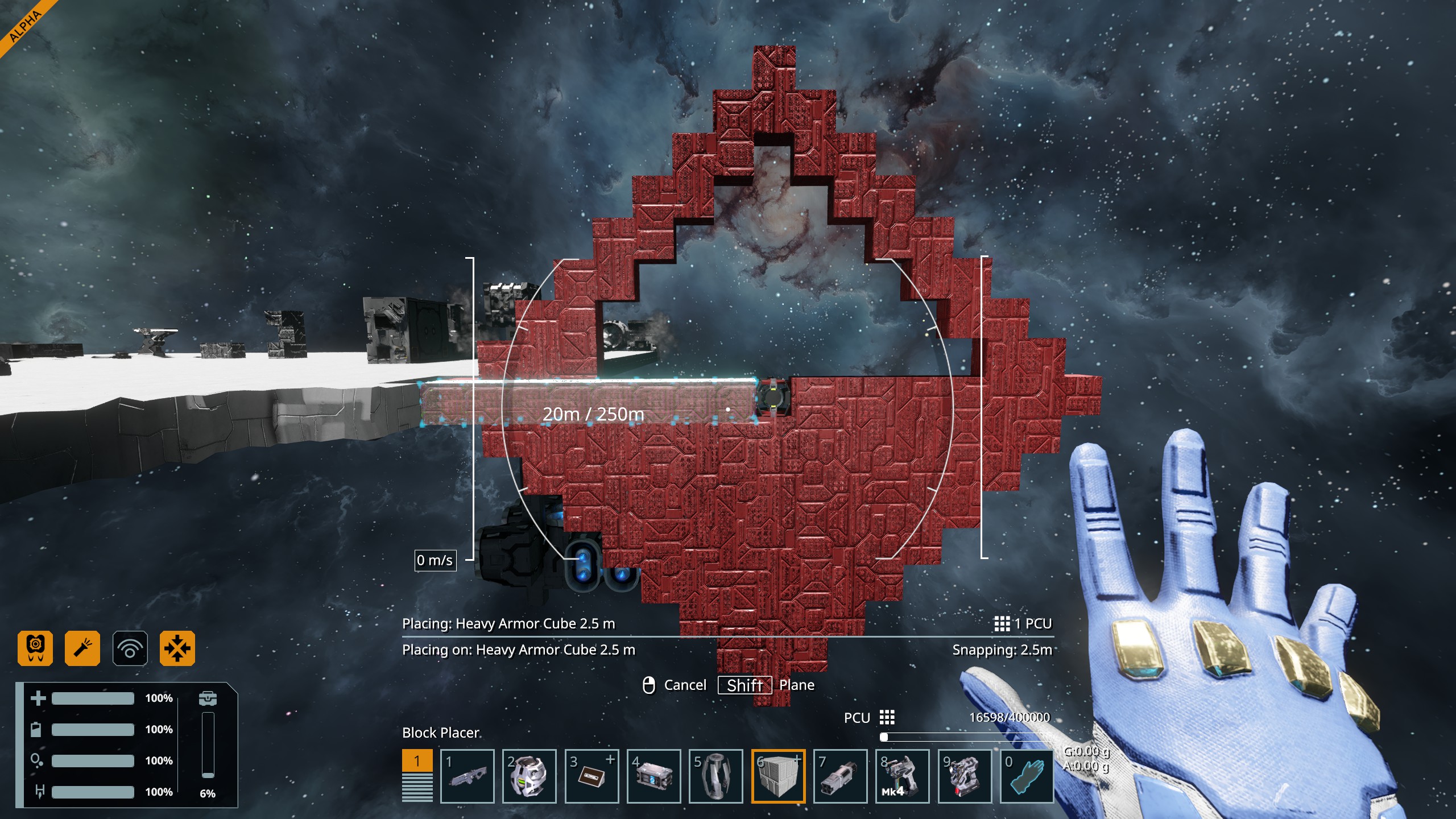
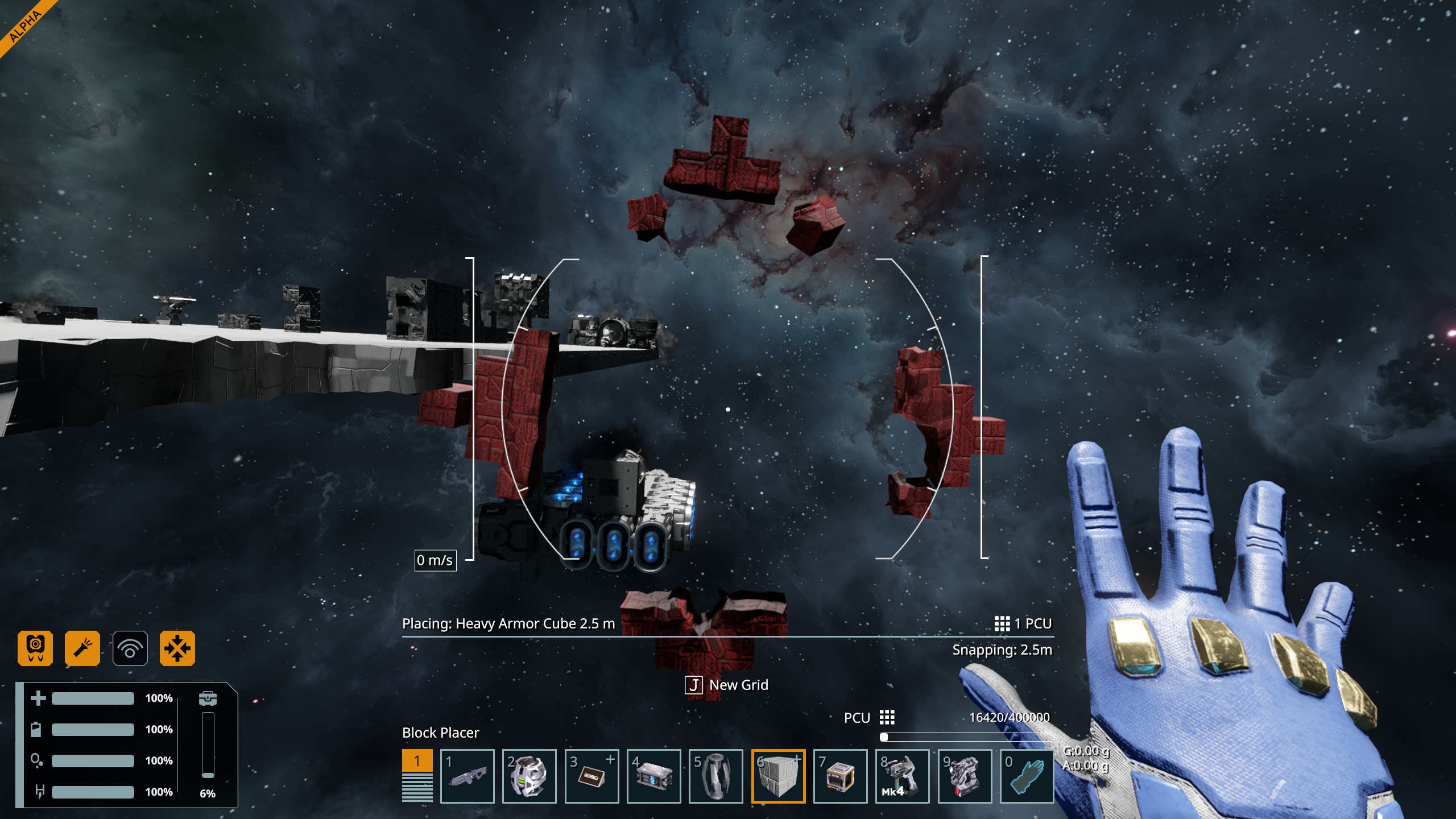
(IMG 1 and 2 images showcase effective range of SE2 2.5m warhead against heavy armor)
In SE1 warheads don't have the same property, as damage can be blocked by armor. Even one layer of heavy armor is (barely) enough to dampen most damage from a large grid warhead.
This is because as stated by wiki.gg on explosions: "The explosion is volumetric for these and loses damage as it destroys blocks to get past until it runs out of damage."
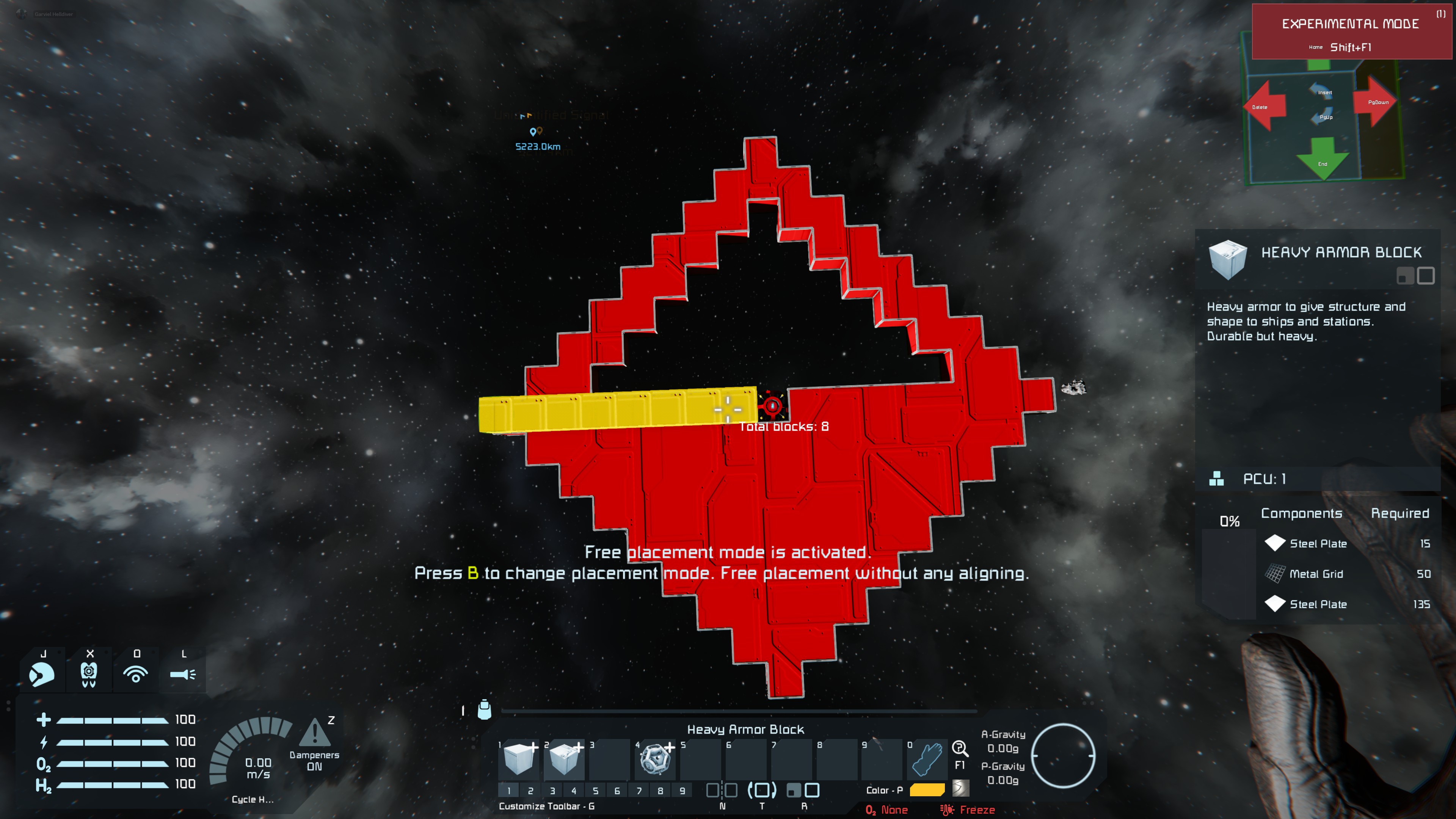
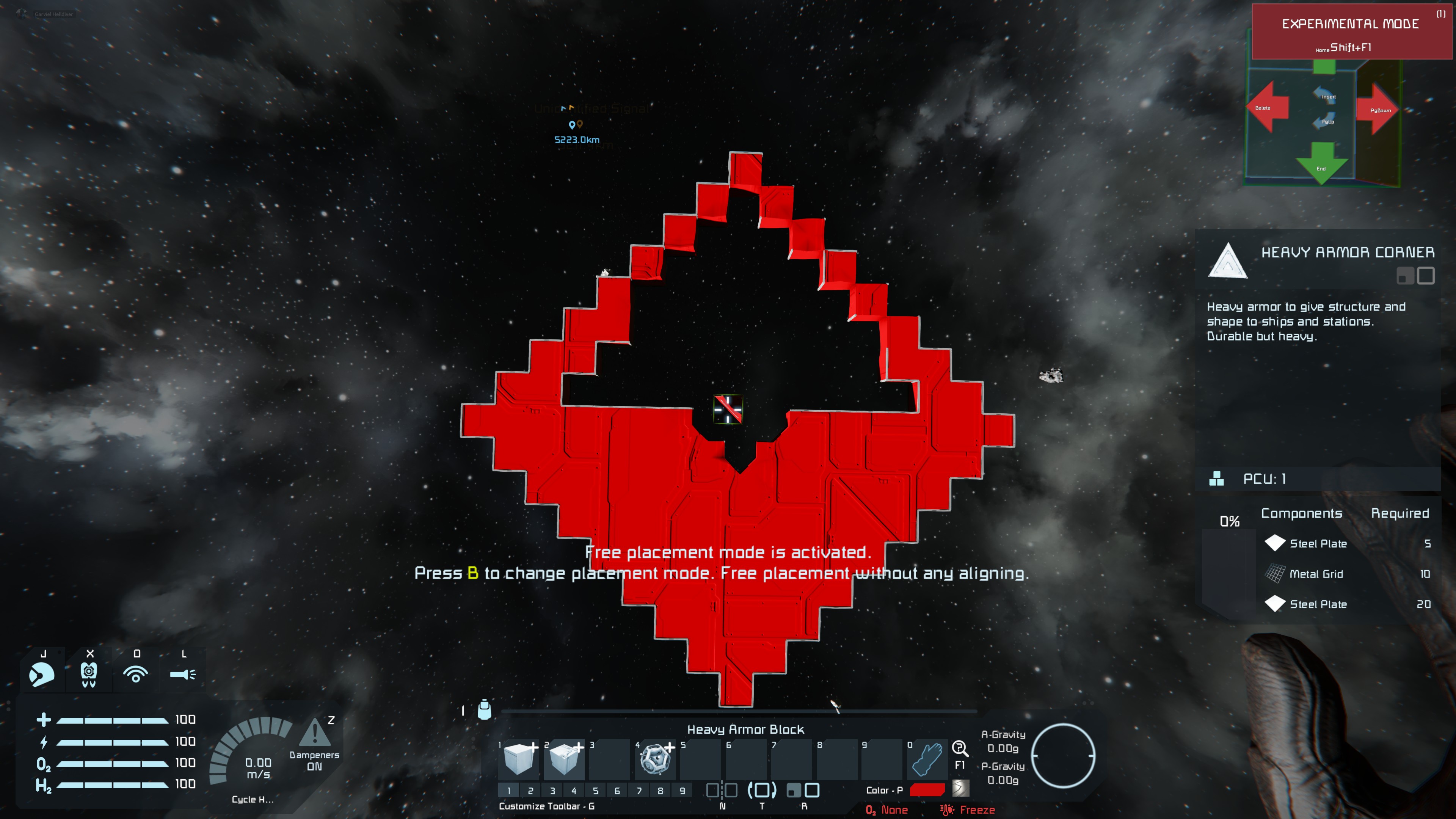
IMG 7 and 8 (taken in SE1) show that damage can be stopped by armor, and effectively too.
Why change or revert?
- Explosions being treated as AOE makes them overpowered, a warhead in SE1 might destroy anywhere from several blocks to dozens of heavy armor blocks (depends on circumstances), in SE2 it can be hundreds.
- Reducing damage will probably not solve the issue, warheads will either be too weak or used to damage more fragile / critical inside components of ships like conveyors, storage blocks, hydrogen tanks, cockpits & players, (due to damage just phasing through blocks)
Does every explosion need to be changed? (opinionSSSSSS)
Some explosions could stay as simple AOE (for reasons like optimization) (ex.: any rocket launchers), but damage fall off should maybe be calculated based on how much block hp is in between origin of explosion and max range of the explosion. ( the more hp, the faster the fall off)
This is all, thanks for reading through all that
~ a fellow engineer
 I like this feedback
I think every explosions should be volumetric and there could be different shape of explosions like shaped charges missiles and sphere shaped warheads. Also warheads should be stronger in athmosphere (or weaker in space) because explosions in vacuum don't have the shockwave but only radiation, heat and shrapnell.
I think every explosions should be volumetric and there could be different shape of explosions like shaped charges missiles and sphere shaped warheads. Also warheads should be stronger in athmosphere (or weaker in space) because explosions in vacuum don't have the shockwave but only radiation, heat and shrapnell.
The volume of the area affected by an explosion is proportional to the mass of the charge.
An explosion of 1 kg of TNT (~4 MJ) is roughly equivalent to the kinetic energy of an 8-kg projectile traveling at a speed of 1,000 m/s or 14.5-kg projectile at 750 m/s
An 8-kg projectile corresponds roughly to a 75–85 mm caliber. Such a projectile contains an explosive charge of about 1-1,5-2 kg of TNT.
An 14.5-kg projectile corresponds roughly to a 105 mm caliber. Such a projectile contains an explosive charge of about 2-3,5 kg of TNT.
The volume of the area affected by an explosion is proportional to the mass of the charge.
An explosion of 1 kg of TNT (~4 MJ) is roughly equivalent to the kinetic energy of an 8-kg projectile traveling at a speed of 1,000 m/s or 14.5-kg projectile at 750 m/s
An 8-kg projectile corresponds roughly to a 75–85 mm caliber. Such a projectile contains an explosive charge of about 1-1,5-2 kg of TNT.
An 14.5-kg projectile corresponds roughly to a 105 mm caliber. Such a projectile contains an explosive charge of about 2-3,5 kg of TNT.
The experiments here are great and very revealing.
The experiments here are great and very revealing.
Oh i didn't see the similar topic.
I made mine : https://support.keenswh.com/spaceengineers2/pc/topic/55417-armor-blocs-dont-do-their-job
But it's roughtly the same thing : armor blocs are useless.
See the video...
https://streamable.com/7tvg3i
Oh i didn't see the similar topic.
I made mine : https://support.keenswh.com/spaceengineers2/pc/topic/55417-armor-blocs-dont-do-their-job
But it's roughtly the same thing : armor blocs are useless.
See the video...
https://streamable.com/7tvg3i
Mine was archived...
(https://support.keenswh.com/spaceengineers2/pc/topic/55417-armor-blocs-dont-do-their-job)
i leave a additionnal comment here, hopping this one will not suffer the same thing.
Mine was archived...
(https://support.keenswh.com/spaceengineers2/pc/topic/55417-armor-blocs-dont-do-their-job)
i leave a additionnal comment here, hopping this one will not suffer the same thing.
Replies have been locked on this page!