


Expanding Mining : Long Ranger Scanner
Below, I have outlined four ideas to improve the resource collection aspect of the game in future updates. I went on an autism spree when it comes to concept art, so I made a sperate thread.
I know it's quite similar to a couple other threads out there.
1. Directional Long-Range Resource Scanners (Mining)
- A) Passive Scanning: Close-range resource scanning remains as it is currently.
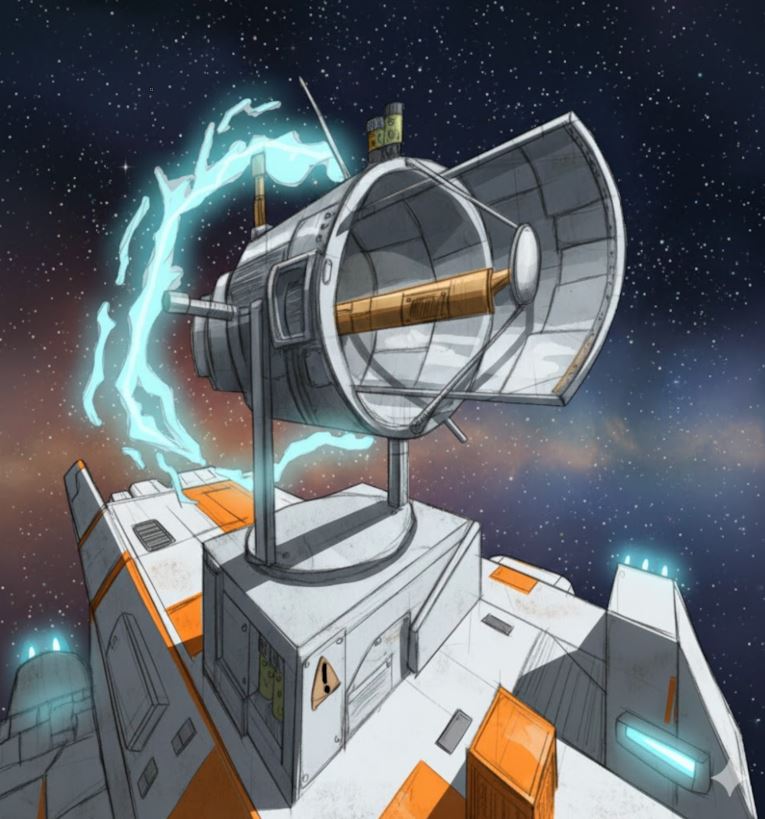
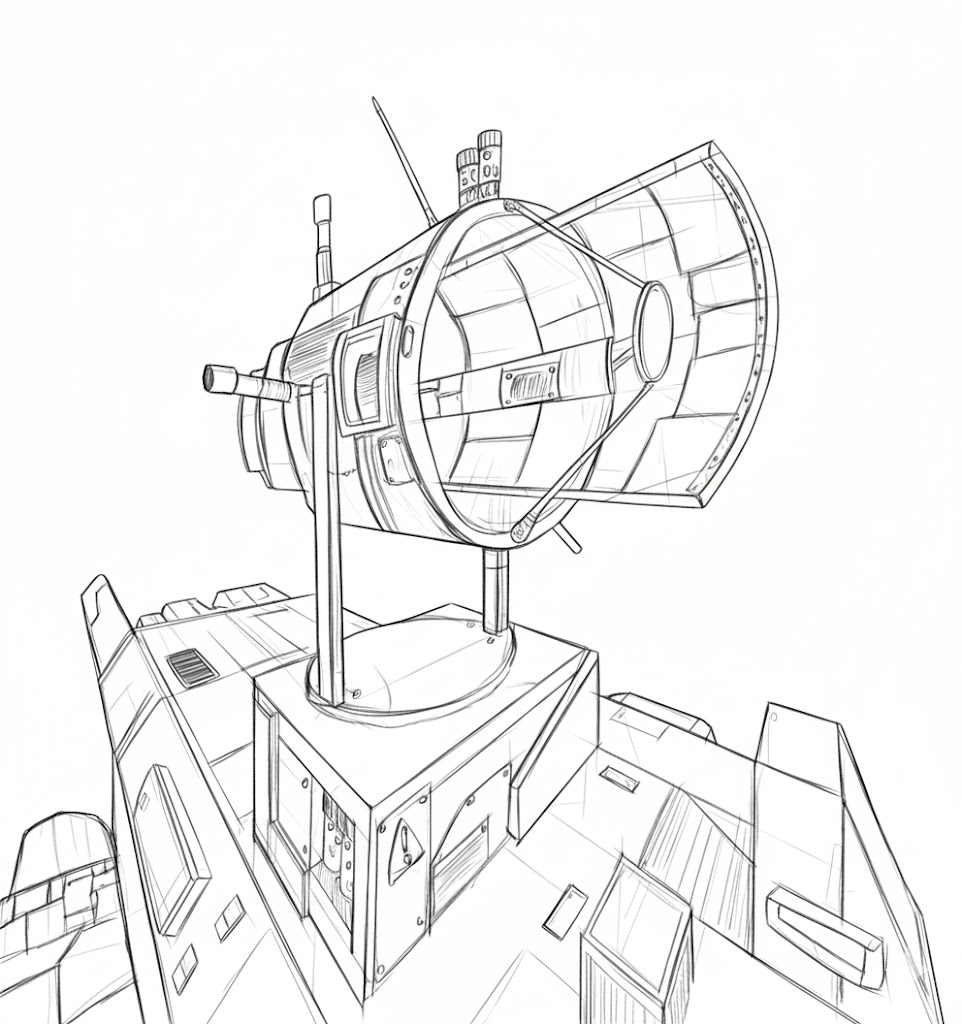
- B) Long-Range Scanning (1km+): A directional beam is emitted by a radar block operated by the player. This block functions like a large, manual turret.
- C) Signature Analysis (Active Gameplay):
c.1) You receive 2 to 4 approximate GPS coordinates from a mission.
c.2) You "lock" the scanner onto those GPS coordinates.
c.3) If the GPS coordinate has "Deep Scan" enabled, you can activate the analysis mode.
c.4) Through a minigame, you discover the specific nature of the GPS coordinate (e.g., Copper Mining Cave, Crashed Warship) plus basic intel (e.g., ship type and potential cargo). - D) Planetary Scanning: Instead of having instant access to all planetary data, the player must bring a HUGE Planetary Scanner into orbit to "unlock" knowledge regarding the planet's primary resources.
Note: This system will likely require several distinct minigames. My goal here is to provide the core concept and the supporting art.
2. Naturally Generated Cave Detectors (Mining)Currently, ores are distributed somewhat randomly across the map, and caves are found only occasionally. It would be beneficial to use the same system that generates "Ore" GPS pings to also generate "Cave" GPS points. This would allow players to detect underground caverns specifically. This adds more incentive to seek out unique locations to dig rather than mining at random.
3. Space Dust Fields (Mining)Currently, space feels very "black and white," with only planets providing a splash of color. Introducing occasional huge space dust fields would add life and color to exploration. This also introduces new mechanics, such as using a Dust Filter to collect rare materials, as dust clouds often contain heavy particles left over from cosmic explosions.
 I like this feedback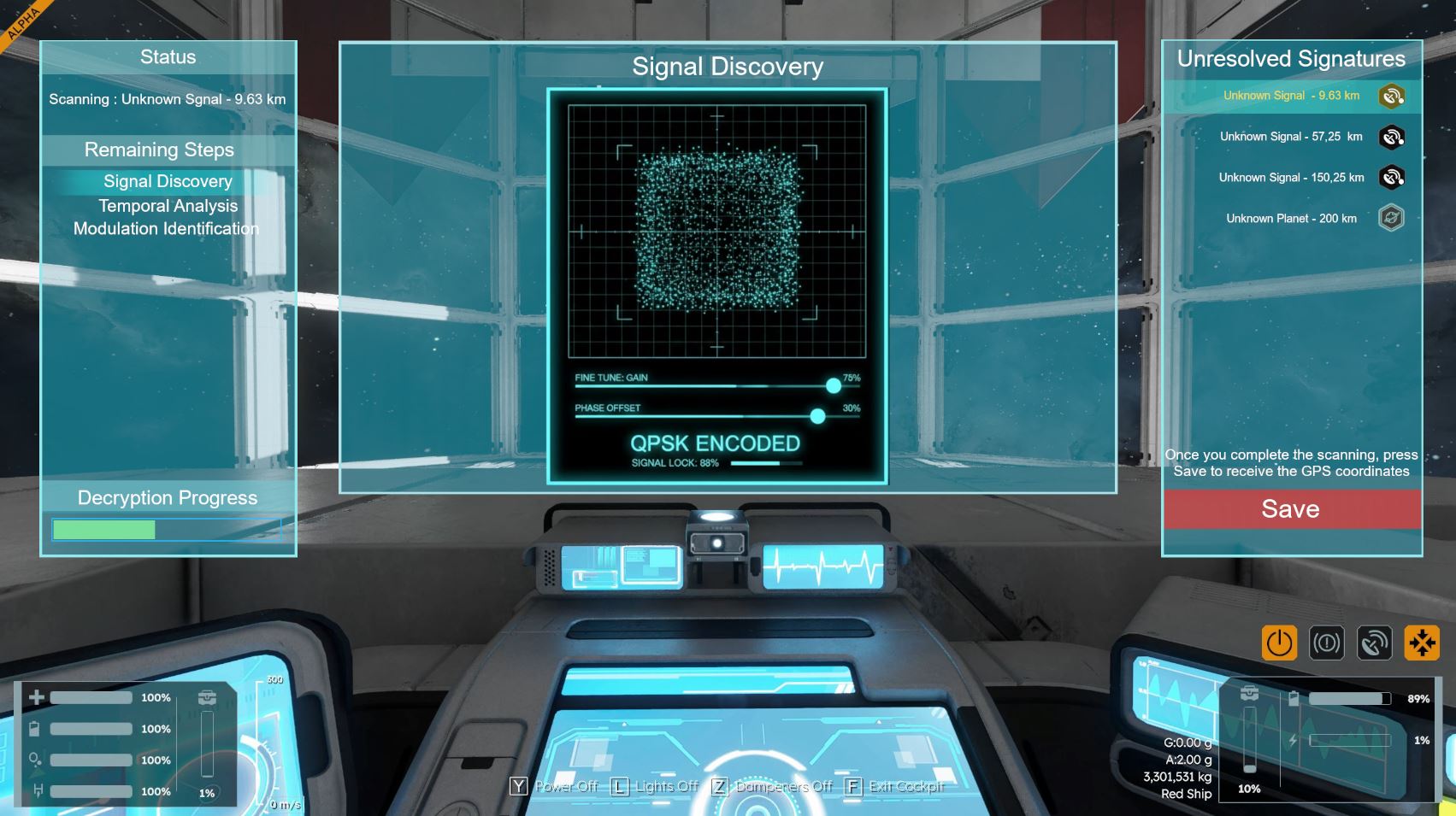
Great idea and concept art :D !!!
Great idea and concept art :D !!!
A sci-fi spectroscopy inspired by the James Webb telescope could also be part of it.
A sci-fi spectroscopy inspired by the James Webb telescope could also be part of it.
I do like the Idea of being able to find things from further away. I proposed something that include game mechanics like passive scanning, Cave detectors, and possible planetary scanning. I linked my Topic below.
Radio Block Idea. New Type of mobile Contract block. | Space Engineers 2 Support
I do like the Idea of being able to find things from further away. I proposed something that include game mechanics like passive scanning, Cave detectors, and possible planetary scanning. I linked my Topic below.
Radio Block Idea. New Type of mobile Contract block. | Space Engineers 2 Support
I really like this idea and I want to add more to it.
I would prefer a modular approach here. In order to do certain scanning activity you will need a combination of blocks.
Spectrograph block can be used to scan asteroids and get the probability for elements containing (ores). You will also need a camera block and select it indise Spectrograph. The camera, of course, can be fixed, so you move your ship to point in a certain direction or place it on top of a custom turret. You need to aim your camera at an asteroid. Then you activate the scanning procedure, either from the block terminal or with a hotbar action. When scanning is done, you will get results printed into chat (or mining channel proposed by David above). Optionally, you can have an LCD block where you select the Spectrograph app (similarly as we have weather or targeting apps in SE1). The app will show you the current state and progress of the scan, and maybe some more detailed insights.
Celestial Body Scanner or Asteroid Finder (help me with a better name :) ), a much more advanced block that can help you find distant asteroids far beyond rendering distance. For a small block version of the scanner, you can set the distance up to 50km, while bigger can allow you to scan farther away but requires some really advanced tech to be built. You also need Antenna and Custom Turret Controller, both selected within the block terminal. When you activate the scanning procedure, the CTC will rotate a couple of times. As a result, you will get a list of GPS coordinates of asteroid locations. You might not see asteroids because some can be far beyond your rendering distance (the game will give you their locations using the asteroid generation algorithm). Also, a message in chat like "10 asteroids have been found", or on the mining channel with a voice telling you that :). The GPS coords will be added to the list of "known" asteroids inside the Asteroid Finder Block. Each asteroid will be automatically named as <SECTOR_NAME>-AST-<PROGRESSIVE_NUMBER>, for example, VERDURE-AST-12345. You can manually select an asteroid from the list and press the "aim" button or press the "aim next" button (or make actions in hotbar ofc). I think you already know where it is going. Each time you press "aim", the CTC will rotate to face the exact location of the selected asteroid and, if you conveniently have a camera facing the same direction as the antenna on CTC, you can now use the Spectrograph to scan the asteroid composition. And if you like what you have found, you can finally press "add GPS marker" (in asteroid scanner) so you can now fly towards it or jump.
Long Range Scanner (again, might need a better name). Same setup as for the asteroid scanner: CTC + Antenna (plus, of course, some combo of rotors/hinges required for CTC). You might also want at least 2 of those to cover both hemispheres. When activated, it will constantly scan the whole hemisphere (CTC will rotate accordingly). The scan distance will start from something like 3km to 10km for the small scanner and up to 20km for the bigger more advanced one. Once a grid is detected in the "cone" of the scanner, the GPS marker with the name of the grid will appear. Next time it is found, the marker position will be updated. If you can "see" the grid in proximity with your close-range scanners, the "last known position" marker for that grid will disappear ofc.
The more advanced scanners you have, the easier it will be to find asteroids that can now be more rare to balance space vs planets as I mention in this related topic.
I really like this idea and I want to add more to it.
I would prefer a modular approach here. In order to do certain scanning activity you will need a combination of blocks.
Spectrograph block can be used to scan asteroids and get the probability for elements containing (ores). You will also need a camera block and select it indise Spectrograph. The camera, of course, can be fixed, so you move your ship to point in a certain direction or place it on top of a custom turret. You need to aim your camera at an asteroid. Then you activate the scanning procedure, either from the block terminal or with a hotbar action. When scanning is done, you will get results printed into chat (or mining channel proposed by David above). Optionally, you can have an LCD block where you select the Spectrograph app (similarly as we have weather or targeting apps in SE1). The app will show you the current state and progress of the scan, and maybe some more detailed insights.
Celestial Body Scanner or Asteroid Finder (help me with a better name :) ), a much more advanced block that can help you find distant asteroids far beyond rendering distance. For a small block version of the scanner, you can set the distance up to 50km, while bigger can allow you to scan farther away but requires some really advanced tech to be built. You also need Antenna and Custom Turret Controller, both selected within the block terminal. When you activate the scanning procedure, the CTC will rotate a couple of times. As a result, you will get a list of GPS coordinates of asteroid locations. You might not see asteroids because some can be far beyond your rendering distance (the game will give you their locations using the asteroid generation algorithm). Also, a message in chat like "10 asteroids have been found", or on the mining channel with a voice telling you that :). The GPS coords will be added to the list of "known" asteroids inside the Asteroid Finder Block. Each asteroid will be automatically named as <SECTOR_NAME>-AST-<PROGRESSIVE_NUMBER>, for example, VERDURE-AST-12345. You can manually select an asteroid from the list and press the "aim" button or press the "aim next" button (or make actions in hotbar ofc). I think you already know where it is going. Each time you press "aim", the CTC will rotate to face the exact location of the selected asteroid and, if you conveniently have a camera facing the same direction as the antenna on CTC, you can now use the Spectrograph to scan the asteroid composition. And if you like what you have found, you can finally press "add GPS marker" (in asteroid scanner) so you can now fly towards it or jump.
Long Range Scanner (again, might need a better name). Same setup as for the asteroid scanner: CTC + Antenna (plus, of course, some combo of rotors/hinges required for CTC). You might also want at least 2 of those to cover both hemispheres. When activated, it will constantly scan the whole hemisphere (CTC will rotate accordingly). The scan distance will start from something like 3km to 10km for the small scanner and up to 20km for the bigger more advanced one. Once a grid is detected in the "cone" of the scanner, the GPS marker with the name of the grid will appear. Next time it is found, the marker position will be updated. If you can "see" the grid in proximity with your close-range scanners, the "last known position" marker for that grid will disappear ofc.
The more advanced scanners you have, the easier it will be to find asteroids that can now be more rare to balance space vs planets as I mention in this related topic.
This is an awesome concent art! I also would love some long(er) range detection instruments, but not a sprecise as e.g. the ore detector block (so not just a gps marker), but a HUD based heatmap like you designed! The radio spectrometry mod in SE1 has basically this, just not as pretty as this! Would love if this also worked for grids in a debuffed form!
This is an awesome concent art! I also would love some long(er) range detection instruments, but not a sprecise as e.g. the ore detector block (so not just a gps marker), but a HUD based heatmap like you designed! The radio spectrometry mod in SE1 has basically this, just not as pretty as this! Would love if this also worked for grids in a debuffed form!
Seems a bit complicated for a simple game like SE but it does look really fun to use so have a like from me!
Seems a bit complicated for a simple game like SE but it does look really fun to use so have a like from me!
Hmmm, speaking of simple:
Field shapes: Sphere, cone, laser
Increase/decrease range (keyboard + mouse wheel)
Dynamically changes shape with range
Use map (when more functionality added) to mark points
Camera for precise aiming, and maybe an aperture circle on screen
Everything else remains the same
Profit
(Bonus) - add functionality, toggleable, for 'Terrain-mapping-radar' to the above system, so you can -see- (on screen or LCD) in the dark, underwater, fog, clouds, sandstorm, smoke, etc as you 'paint' the terrain/object.
Hmmm, speaking of simple:
Field shapes: Sphere, cone, laser
Increase/decrease range (keyboard + mouse wheel)
Dynamically changes shape with range
Use map (when more functionality added) to mark points
Camera for precise aiming, and maybe an aperture circle on screen
Everything else remains the same
Profit
(Bonus) - add functionality, toggleable, for 'Terrain-mapping-radar' to the above system, so you can -see- (on screen or LCD) in the dark, underwater, fog, clouds, sandstorm, smoke, etc as you 'paint' the terrain/object.
i would scratch the "minigame" idea and it just show base element compositions. maybe like a bargraph where each element is found along the Z axis and the closer you are to a particular item being dead center in the crosshairs of your target area the higher the readout on the Y axis.
Space engineering is a minigame of its own, design, troubleshoot, problemsolve. adding anything less than data gathering and interperetation/analysis would be a travesty.
i would scratch the "minigame" idea and it just show base element compositions. maybe like a bargraph where each element is found along the Z axis and the closer you are to a particular item being dead center in the crosshairs of your target area the higher the readout on the Y axis.
Space engineering is a minigame of its own, design, troubleshoot, problemsolve. adding anything less than data gathering and interperetation/analysis would be a travesty.
Replies have been locked on this page!