


Guided Missiles
Guided missiles are already a standard part of modern technology, so it feels natural to explore how they could fit into SE2. If done right, they could really spice up combat and make it more balanced.
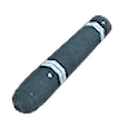
Rocket weapons in SE felt a bit underwhelming. They were expensive - both in terms of resources and PCU - and quite easy to dodge (slow and followed a straight path).
The only way to get something like guided missiles was to build them as full grids. While that was fun from an engineering perspective, in practice they were still slow, expensive, and not very effective—even against NPCs, and especially in PvP.
I’d love to see more depth in combat, and guided missiles could be one of the tools to achieve that.
Of course, the exact balance and combat design is ultimately up to the developers. But based on community discussions, player feedback, and some personal thoughts, here are a few ideas that could be worth considering.
Rocket launchers (fixed and turrets) could support different types of missiles
- Basic dumb-fire rockets
- Guided missile
- Advanced guided missile
Guided missiles
Target lock a grid or a subsystem and missiles will try its best to hit there.
Guided missiles could have a longer range, making them useful for engaging targets beyond the reach of other weapon types.
More advanced missiles could offer higher speeds or smarter tracking behavior.
Missiles in general could deal more damage, making them feel more impactful and worth the investment.
Custom built missiles
For custom-built (grid) missiles, one limitation is that they follow the same speed rules as ships. Maybe there could be ways to make them more viable, considering the engineering effort and PCU cost. For example, their warheads could be significantly more powerful - so even if they’re harder to land, a successful hit really matters.
Point Defense
On the defensive side, there are also some interesting possibilities:
Point defense systems (like gatling turrets) could be more accurate and effective against fast-moving guided missiles. This can aslo help mitigate hydroman problem.
PDS systems could include some form of overheating/reloading, creating short downtime windows where missiles have a chance to get through.
There could also be dedicated countermeasures as an alternative to gutrlings - cheaper and lower PCU, but with longer reload times and less effectiveness against advanced missiles. These could be especially useful for smaller ships trying to escape.
Armor
With that, gatling turrets could naturally shift more toward anti-missile and anti-personnel roles, and be less effective against armor.
Each block can have different resistance against certain weapon types. Armor blocks and cockpits, for example, could be very resistant to small-caliber bullets.
Thx for reading.
I’m sure I’ve missed a few things - it’s been a long discussion about missiles and combat overall. Feel free to add your own thoughts so the devs can get a broader perspective on the topic.
Similar topics:
https://support.keenswh.com/spaceengineers2/pc/topic/45273-combat-overhaul
 I like this feedback
Great post, I've also thought for a while on this topic - and wonder if the solution for targeting is as simple as this:
In-Code block tags.
I'm familiar with game code, albeit in a personal project sense. But I think a way to have guided "heat" missiles would be:
they a target a block with a certain in-code tag (i.e. "power_block").
This is a solution in the backend where the projectile is fired and after a distance, will track the nearest block with the "power_block" tag. All ships need a power block, so this is a universal solution!
Again, I'm familiar enough with coding - but not a professional... so I am sure there is a solution I'm not thinking of. But this has been a concept I've played around with for some time.
In future:
Guided missiles of different varieties can be added
-Hardpoint targeting missiles (move very fast to avoid being shot down)
-Thruster targeting missiles
-etc.
---------------------------------------------------
On your original post:
"gatling turrets could naturally shift more toward anti-missile and anti-personnel roles"
Yes. Agreed.
I think an MG/HMG should become a primary ballistic weapon choice. The gatling is a resource heavy system (due to large amounts of ammo) but provides efficient missile/ close range defense.
In this way, now Combat gameplay would be expanded - to approach a heavily defended ship with Gatling Hardpoints, one must disable the weapon systems from a distance before fighter/boarding approach...
--------------------------------------------------
Again, great post 4PEACE.
I also appreciated your support on my forum posts as well - I think we have some pretty good ideas for SE2! :)
Cheers!
Great post, I've also thought for a while on this topic - and wonder if the solution for targeting is as simple as this:
In-Code block tags.
I'm familiar with game code, albeit in a personal project sense. But I think a way to have guided "heat" missiles would be:
they a target a block with a certain in-code tag (i.e. "power_block").
This is a solution in the backend where the projectile is fired and after a distance, will track the nearest block with the "power_block" tag. All ships need a power block, so this is a universal solution!
Again, I'm familiar enough with coding - but not a professional... so I am sure there is a solution I'm not thinking of. But this has been a concept I've played around with for some time.
In future:
Guided missiles of different varieties can be added
-Hardpoint targeting missiles (move very fast to avoid being shot down)
-Thruster targeting missiles
-etc.
---------------------------------------------------
On your original post:
"gatling turrets could naturally shift more toward anti-missile and anti-personnel roles"
Yes. Agreed.
I think an MG/HMG should become a primary ballistic weapon choice. The gatling is a resource heavy system (due to large amounts of ammo) but provides efficient missile/ close range defense.
In this way, now Combat gameplay would be expanded - to approach a heavily defended ship with Gatling Hardpoints, one must disable the weapon systems from a distance before fighter/boarding approach...
--------------------------------------------------
Again, great post 4PEACE.
I also appreciated your support on my forum posts as well - I think we have some pretty good ideas for SE2! :)
Cheers!
Personally, I like the "engineered" guided missiles designed as a grid. There are a large number of such solutions for SE1, but unfortunately they are very impractical for less experienced players or programmers—let alone beginners.
There should be a system of self-guiding homing heads for guided missiles—radar (both active and passive) and optical (“television,” or possibly infrared and laser).
There could also be a simple system for switching control between the ship and the guided missile, so that the player could virtually "ride the missile" and guide it to the target. In SE1, this was possible, but it was structurally very complex and impractical to use.
What should the guided missile look like in terms of design?
It needs a propulsion system—one (or five) engines, a fuel tank, and a power source—a battery.
It needs a flight control system—a gyroscope and an autopilot unit.
It needs a guidance system—a homing seeker, or command guidance with a camera and a communication system.
It needs a warhead. Even the smallest warhead for a guided missile should be as effective as the most powerful artillery shell.
Personally, I like the "engineered" guided missiles designed as a grid. There are a large number of such solutions for SE1, but unfortunately they are very impractical for less experienced players or programmers—let alone beginners.
There should be a system of self-guiding homing heads for guided missiles—radar (both active and passive) and optical (“television,” or possibly infrared and laser).
There could also be a simple system for switching control between the ship and the guided missile, so that the player could virtually "ride the missile" and guide it to the target. In SE1, this was possible, but it was structurally very complex and impractical to use.
What should the guided missile look like in terms of design?
It needs a propulsion system—one (or five) engines, a fuel tank, and a power source—a battery.
It needs a flight control system—a gyroscope and an autopilot unit.
It needs a guidance system—a homing seeker, or command guidance with a camera and a communication system.
It needs a warhead. Even the smallest warhead for a guided missile should be as effective as the most powerful artillery shell.
Replies have been locked on this page!