Jump Drive

4Peace shared this feedback 2 months ago
Not Enough Votes

e252b5f542cc436dd779cb46babe8689

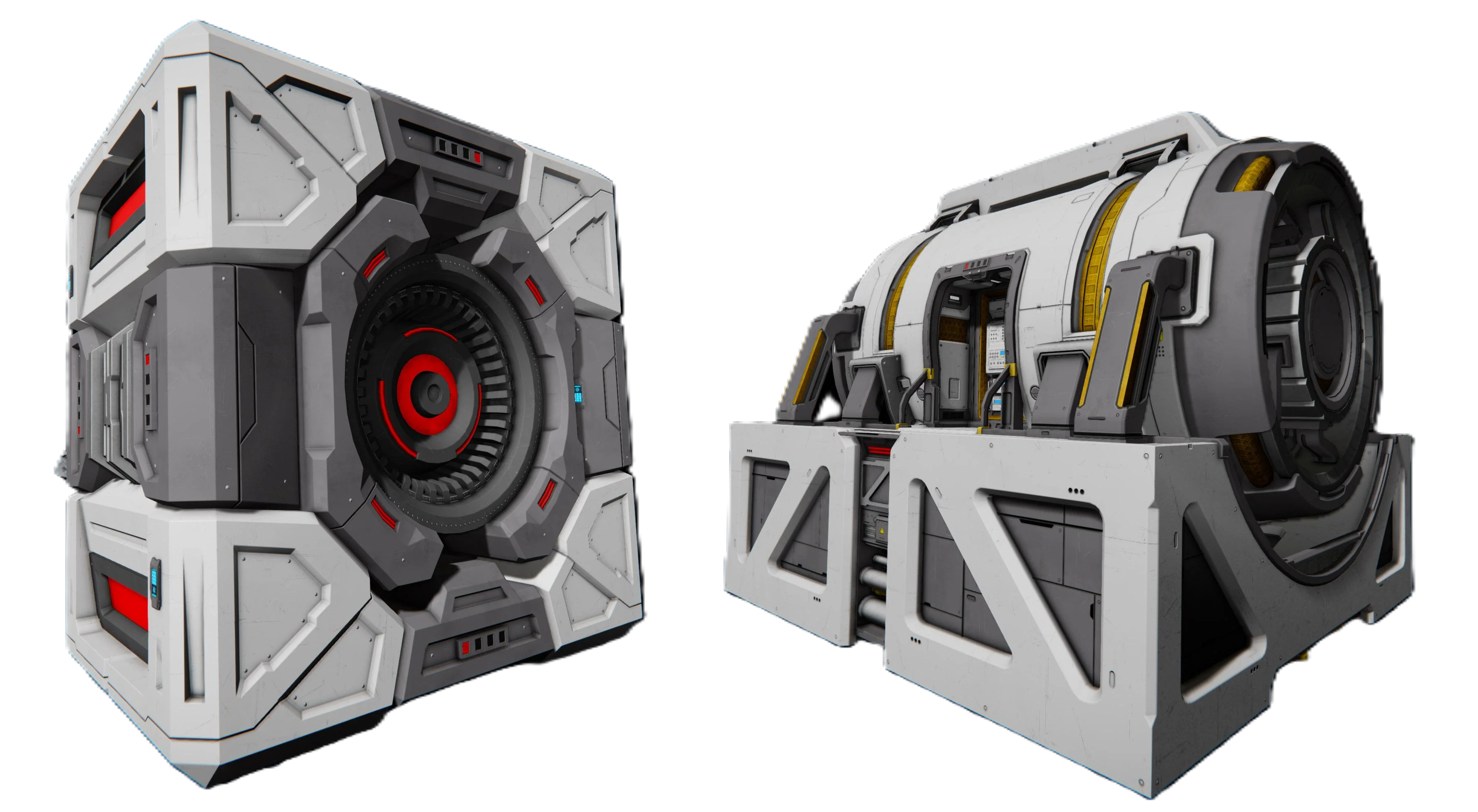
This is a reminder of two major issues we had in SE1 related to the Jump Drive mechanics.

The first issue is travel pacing. Long-distance journeys often required multiple jumps, and between each jump you may be forced to wait up to 7 minutes doing absolutely nothing while the drive recharges. This isn’t engaging gameplay—it’s just frustrating downtime that breaks the flow of exploration and logistics.

The second issue was combat balance. In combat, Jump Drives currently act as an almost guaranteed escape button. A ship can jump away at maximum speed and constant rotation, with no meaningful commitment or counterplay. This makes disengagement trivial and undermines tactical combat.

The goal is to limit Jump Drives in combat, while at the same time improving them for regular travel.


Instead of requiring Jump Drives to be pre-charged in advance, a jump would always start charging from zero when activated. The maximum power input could be increased significantly so that a full charge takes around 20-30 seconds. During this charge-up phase, the ship would need to remain relatively stable—moving faster than, for example, 10 m/s or rotating aggressively would cancel the jump and dump the stored charge. In addition to energy, a jump might also require a "zone chip"/"jump chip", but that is debatable.

This change would make combat jumps a risky commitment rather than an instant escape. You would need to create a window of safety to jump out, giving attackers a chance to interrupt or capitalize on pressure.

At the same time, this system would greatly improve long-distance travel. Instead of waiting several minutes between jumps, you will still need to use a lot of power but wait relatively small time (providing you have enough power generation to max out the input). Travel becomes faster and more interactive, without removing the strategic cost of jumping, and allow you to build less jump drives overall.

With these changes in place, Jump Drives would remain powerful but more balanced, clearly separating their role in combat from their role in exploration and logistics.

For players who want an even more structured and infrastructure-based way to travel long distances, Safe Zone Jumps could serve as an alternative method of travel.


Thx for reading.


Same Suggestion for SE1

Replies (2)

photo
3

What I like to do is jumping when I'm flying at maximum speed, that you have to gain speed before you can jump and then you have to slow down again at the destination (or continue flying). So that requirement for a stable position is unsuitable for my play style, and I'm sure I won't be alone in that.


Yeah, cancel charging with rotating aggressively, I agree with that, because another thing I like to do is manually turn to the direction I want to jump, and then just blind jump to the distance I set on the hotbar, I don't use waypoints for jump drive at all.


So the way I would limit this is to fly at a constant speed (0 to max) in a constant direction and without any sideways movement (so just forward), with some tolerance for slow changes in speed and direction, that way you're still an easy target, not doing evasive maneuvers.


Another thing it might require is that you have to turn off weapons, at least the main bigger ones, something like personnel turrets would be fine and possibly shields if they ever add those. Something like having to reroute power from weapons and shields.

photo
4

Yes, it is acceleration and sporadic rotation that mess up the delicate jumping calibration process :). Being at 0m/s or 100m/s is the same as long as you do not change that speed too fast. You can still accelerate or slow down slowly, but not exceed a certain limit, like more than 5m/s^2.

photo
4

@AthinCZ

+ for considering acceleration instead of absolute speed

+ for limiting weapons before jumping

The last one could be achieved with a simple temperature mechanic. Your whole grid would have a single temperature value. Weapons add to it when firing, while the hull passively dissipates the heat over time, with a rate depending on its size.

This naturally limits how many weapons you want to place on a ship — more weapons = more heat = lower sustained fire rate. So there is a sweet spot between the grid size and a number of weapons for the best DPS.

Now, about Jump Drives. They rely on superconductors, and those need to stay cool. If you’ve been firing continuously, your ship will be running hot, which could naturally prevent you from jumping. You’d need to stop firing for a while and let the ship cool down first.

I think this alone could go a long way in balancing Jump Drives in combat. Other factors like limited acceleration and rotation would still apply in general for any situation besides combat.

photo
photo
2

I like part of your idea - I like the part about the delay to jump so that people can't quickly jump away from combat.

However, I think other than creating some delays/difficulties in initiating a jump in order to ensure people can't easily run from a battle they are losing, jump drives should remain like they were in SE1.

The way SE1 jump drives worked allowed you to travel long distances without long delays in between - you just needs to have lots of jump drives. Lots of jump drives meant bigger ships. This made the game more authentic for me. If you had a small ship you could not easily fly long distances and so you came to rely on motherships for long distance travel. You can have a mothership that can fly all the way to the other side of the star system because they have 20 jump drives on board and when they arrive you can fly out of the hanger on your smaller ship to explore. If the mothership is lost and you need to fly back, it would take awhile but still be possible with your smaller ships jump drive - giving a good reason to want a mothership.

The way SE1 jump drives work encourages the use of ship classes. So I say keep them but with the delay you suggestion when activated.

photo
3

An activation-delay where maneuvers are limited is fine, as is a thermal-system like 4Peace suggested that prevents jumping if a ship is too hot (say from going ham with guns in combat), but long-range jumping should be the preview of specialized grids (ships with oversized jump-systems, detachable long-range drives, or structures akin to mass-relays/stargates).


Mixing travel-options would allow a proverbial "best of both worlds", as a small ship with short jump-range could use a gate network for quick long-distance travel at the risk of running in to a blockade, while larger dedicated jump-ships could circumvent such hazards at the cost of needing more resources to build and having a smaller proportion of their mass dedicated to non-jump related activities.

photo
3

There are still plenty of reasons to build bigger or dedicated jump ships (or fast travel lines) even with these changes.

First, even if you reduce the Jump Drive charge time, long-distance travel still becomes tedious in a small ship. If you need, say, 5 jumps, that’s still 5 separate steps — charge, (align), jump, repeat. Even if each charge is faster, it adds up.

Second, faster charging would require very high power input. A small ship simply won’t have the reactor capacity to sustain something like a 20s charge time, so in practice it will still take much longer compared to a large ship.

Third, if you add even a simple thermal mechanic (which would help a lot of systems btw), you introduce another natural limit. Even if you somehow cram a huge reactor into a small ship, you’ll run into heat dissipation issues. At that point, you either can’t charge efficiently or can’t jump at all until you cool down.

These 3 factors together already push players toward larger, specialized ships — without needing hard artificial timers.

Also, making charge time depend on available power input creates interesting tradeoffs. On bigger ships, you can still choose:


  • fewer jump drives + multiple hops
  • or more drives + higher power + faster long-range jumps

This is especially relevant in multiplayer where PCU matters.

And honestly, I don’t think a single jump across the entire system should be trivial. That kind of mobility removes the need for infrastructure. For moving fleets efficiently, I’d much rather see things like jump networks, gates, or safe-zone travel hubs — something that creates strategic locations instead of bypassing them entirely.

photo
2

4Peace - In-game thermal mechanics should be linked to the power output of energy sources.

Are you charging the jump drive? Your coolers are glowing red to orange.


Will small ships have trouble with long-range jumps? Well, they will... They can't have all the goodies.

photo
1

Keen has shown 'capacitor' blocks? They may want to keep the 'get out of jail free' aspect of a quick jump from an encounter with an recharge time to use quickly again, maybe for new/fresh players just starting out.

For more experienced players, maybe a jump drive 'inhibitor' block could also work, which creates an interdiction field around an area. Could only have a larger ship be able to field one. Small ships will have to step lightly around a big ship to not get caught in one, and when more advanced players clash, ensures no easy jump away once in the fight.

For player bases, could also help with control/security for it's airspace.

If they had a scanner/sensor for ships to look for heat sources and EM radiation, since this is a subsystem type of game, you could direct your fire at those locations on ships/bases. Take out power generation, jump drives, would be easier with it.

photo
2

We still have to see what this new capacitor block is really about. I expect it to come with its own trade-offs — one of them probably being significant weight.

Even if you manage to install enough capacitors to fully charge a Jump Drive, you still need to generate power to recharge them for the next jump. There will also be energy loss (likely even higher than with batteries), so you’d end up wasting a lot of energy in the process.

And that wasted energy could naturally turn into heat — which is why even a simple heat mechanic would be very useful. When you’re generating power, storing it in batteries/capacitors, or firing weapons, you build up heat. And until you cool down, you shouldn’t be able to jump.

So capacitors aren’t really a silver bullet for jump mechanics, they help (which is good IMO) but not eliminate all the challenges.

If anything, I see them being useful in cases where you don’t have strong power generation onboard. For example, you might not want big, expensive reactors (or any reactors at all) on all of your ships. Instead, you could rely on capacitors that store just enough energy for a single jump. Then you recharge them again for the return trip (for example when docked to a station on your destination). In that setup, solar and other renewable sources become much more important.

And again, if you factor in heat mechanics, even if you can afford lots of reactors, you might choose not to use them. Nuclear reactors would generate a lot of heat, making them undesirable for most ships in space due to constant overheating issues. Only large capital ships could realistically dissipate that heat fast enough. On the opposite hand, planets will become a desirable place to build bases and infrastructure, compensating for the penalty of having a gravity well.

Fusion reactors, on the other hand, could be much better in terms of power-to-heat ratio — but they should be extremely expensive and maybe require exotic, non-craftable components.

photo
2

Yes, that is what I was wondering, if a 'quick-jump' from fully charged capacitors will be intentioned in their release? After you burn it, then the slow recharge for normal use, or to prep another quick-jump for standby, is needed. Or to dissipate heat. If you get attacked again while doing that, you can't do a long jump again. Maybe a shorter one? lol, then it would be a race of shorter and shorter jumps to safety, if you could track the target you're chasing.

photo
2

Interdiction is tricky for games like SE.. Requiring a "large ship" isn't much of a drawback, Keen wants resources to be plentiful to minimize downtime between fights for combat players so big wont be hard to do, and the vast majority of people that would use interdiction will probably be flying larger ships anyways simply because it is easier to out-mass an opponent than it is to out-fly them. If you want good interdiction then we'd need to come up with a way to ensure the interdictor is punching up instead of down, but now I'm off topic.


As for quick-jumping... watching people spam 5km jumps every 10 secs in pvp is annoying. We'll probably want drives to act almost like they do in SE1 with a quick activation but longer charge-up time (preferably with a minimum of at least a minute) while relying on larger drive-sets or external ftl-propulsion methods to get longer jumps done more quickly.

photo
2

@Tael

Yeah, doing a series of quick jumps during combat feels like an anti-pattern. People got used to it in PvP because it added something to SE1’s otherwise pretty basic combat, but I’m sure there are better ways to make combat interesting than just jumping behind the enemy.

It also completely undermines fleet formations and any kind of tactical positioning.

Even with something like a 20s charge time window, plus limits on acceleration/rotation (and overheating), it already becomes much harder to pull off mid-fight — which is good.

But there is one more crucial thing related to charging mechanics. If you want to jump, you start charging from 0. There shouldn’t be any “remaining charge” stored after a previous jump, even if it was very short. Whether it’s a 5 km jump or 2000 km, you still need to go from 0 to 100 every time.

Maybe longer jumps could require extra calibration time, but not extra energy — the cost to “open the wormhole” stays the same.

Yes, this would negatively impact the old SE1-style asteroid scouting, where you just hop from rock to rock with a jump drive. But honestly, I never liked that approach anyway.

With asteroid rings and clusters coming in, resource searching should be more about knowledge, skill, and maybe better scanners — not just random wandering and blind jumping around space.

photo
Leave a Comment
 
Attach a file
You can't vote. Please authorize!