


Space Engineers 2 - Stone Usage + Centrifuge - Possibilities, Expansions, Etc
SummaryI’d love to see Stone return as a meaningful resource in Space Engineers 2, especially for crafting cement / concrete construction blocks and feeding a new industrial processing chain. In SE1, mods like the Gravel Sifter unlocked useful secondary resources from Stone, improving early-game survival and minimizing waste. Bringing a native version of that concept into SE2—supported by a new Centrifuge block—would enrich progression, deepen engineering gameplay, and expand SE2’s evolving production system.
1. Stone as a Useful Building Material
- SE2’s cleaner mining is great, but Stone feels too abundant to ignore.
- Cement/concrete-style blocks would give players inexpensive building materials early on.
- Helps bases feel grounded and reduces dependency on metal-heavy structures at the start.
2. Cement / Concrete Construction Blocks/Stone-derived byproducts (dust, filler, powders) processed through the Centrifuge could be used to create Concrete Blocks.
Concrete Block Recipe Example
- 75% Concrete mix (dust + filler + water/chemical binder if added later)
- 25% Iron (rebar equivalent / minimal structural reinforcement)
Benefits:
- Extremely affordable early-game building option
- Stone becomes valuable instead of discarded
- Works thematically with planetary construction, mining bases, and survival starts
- Helps new players establish infrastructure without exhausting metal reserves
3. Inspiration From SE1’s Gravel Sifter
- The SE1 Gravel Sifter crushed Stone → gravel → sifted trace ores.
- Created a safety net during resource-scarce survival starts.
- Reduced waste and supported early-game progression.
- A native SE2 system could refine this while keeping the spirit intact.
4. Better Early-Game Progression
- Gives players dependable materials even on barren worlds.
- Smooths survival pacing—no getting stuck due to bad ore generation.
- Encourages exploration and expanding production rather than grinding.
5. Enhancing Resource Efficiency
- Every scoop of mined material gains value.
- Supports inventory management, industry planning, and long-term growth.
- Reinforces SE2’s “use what the world gives you” engineering fantasy.
6. Proposed New Block: Centrifuge (Separation + Combination System)A mid-tier industrial block handling bulk materials, trace extraction, and advanced synthesis.
A. Core Function – Separation From Gravel/Pebbles Workflow:
Stone → Crushed → Gravel/Pebbles → Centrifuge
The Centrifuge separates gravel into:
- Trace metal ores
- Ultra-fine dust / powder
- Low-grade industrial filler
Keeps Stone relevant while staying balanced.
B. Separation / Combination Dual-Mode System1. Separation Mode (Early/Mid Game)Breaks materials into simpler forms:
- Gravel → trace ores + powders + filler
- Mixed scraps → base elements
- Future liquid/plant matter → filtered components
Matches the traditional: Ore → Ingot → Component progression.
2. Combination Mode (Mid/Late Game)For advanced synthesis and min-maxers.
Combines refined materials into:
- Composite ingots
- Specialized chemical dust mixes
- Enriched ore variants
- Experimental alloys
Supports advanced crafting like: Ore → Compounds → Ingots → Components
C. Centrifuge Upgrade Modules (2–4 Slots)Since SE2 already supports modular upgrades, the Centrifuge would naturally feature 2 or 4 upgrade slots, allowing players to tune performance.
Possible upgrade modules:
- Yield Module – increases trace ore extractions
- Speed Module – faster separation/combination cycles
- Efficiency Module – reduces power draw
- Purity Module (optional future) – improves quality of outputs in both modes
These upgrades help the Centrifuge scale from early utility to late-game industrial powerhouse.
D. Why This System Fits SE2’s Evolution
- Builds on SE1’s Assembler logic (construct + deconstruct).
- Matches SE2’s expanding tiered production chain.
- Introduces meaningful mid/late game engineering depth.
- Keeps early-game simple, cheap, and accessible.
- Encourages creativity in base design and resource flow.
 I like this feedback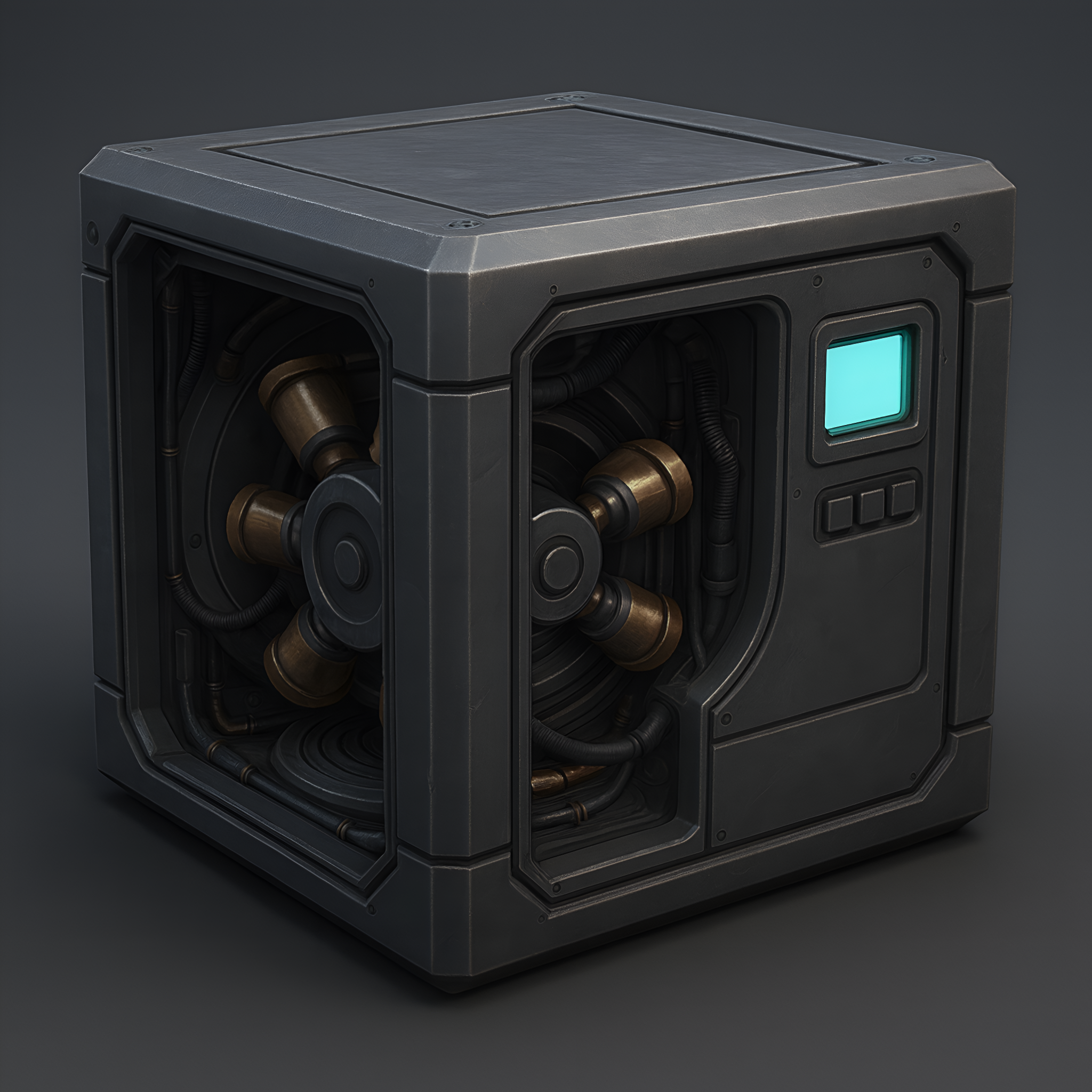
There is an infinite amount of stone. I saw mentioned that stone with the 'trace ores' will just crash economies, since you can scale up infinitely with infinite stone. Maybe stone/dirt only for concrete...?
I'm wondering how to balance the suit's survival kit, for a suit only start on water/ice worlds, if you can't use any of that...?
Similar logic to both of these scenarios, in that if you enable 'trace ores' with the processing of ice or water, then you get infinite resources, again? And crash whatever sort of economy SE2 will have...?
There is an infinite amount of stone. I saw mentioned that stone with the 'trace ores' will just crash economies, since you can scale up infinitely with infinite stone. Maybe stone/dirt only for concrete...?
I'm wondering how to balance the suit's survival kit, for a suit only start on water/ice worlds, if you can't use any of that...?
Similar logic to both of these scenarios, in that if you enable 'trace ores' with the processing of ice or water, then you get infinite resources, again? And crash whatever sort of economy SE2 will have...?
DJ Wolf - Concrete with 25% iron? That's not even used in fortifications...
Realistically, reinforced concrete contains 0.5-2% iron/steel by volume or 1-5% by mass, or 30-200 kg per cubic meter.
You also forgot (or don't know) one material - remelted stone, artificial basalt. There is an entire industry of "stone metallurgy" (I don't know the English term) where almost all structural elements are made from remelted stone - bricks, slabs, blocks, pipes, fittings, gutters...
Another similar area of building material production where stone is used is the ceramics industry... The "waste" from the refinery in the game will almost certainly be very finely ground stone (the ore is finely ground so that as much useful metal as possible can be extracted). It is almost an ideal material for ceramic technologies - the production of bricks, but also other ceramic building elements. A very important thing is that the water used to produce ceramic building elements can be quite effectively recycled during production.
The third area, which is being researched quite intensively in preparation for the construction of a lunar base, is the sintering of regolith. Regolith is also finely crushed stone.
DJ Wolf - Concrete with 25% iron? That's not even used in fortifications...
Realistically, reinforced concrete contains 0.5-2% iron/steel by volume or 1-5% by mass, or 30-200 kg per cubic meter.
You also forgot (or don't know) one material - remelted stone, artificial basalt. There is an entire industry of "stone metallurgy" (I don't know the English term) where almost all structural elements are made from remelted stone - bricks, slabs, blocks, pipes, fittings, gutters...
Another similar area of building material production where stone is used is the ceramics industry... The "waste" from the refinery in the game will almost certainly be very finely ground stone (the ore is finely ground so that as much useful metal as possible can be extracted). It is almost an ideal material for ceramic technologies - the production of bricks, but also other ceramic building elements. A very important thing is that the water used to produce ceramic building elements can be quite effectively recycled during production.
The third area, which is being researched quite intensively in preparation for the construction of a lunar base, is the sintering of regolith. Regolith is also finely crushed stone.
I finally took some time to put together my own comprehensive feedback on mining and production.
It’s a long read, but I tried to incorporate many of the great ideas from this and other similar suggestions.
Here it is:
https://support.keenswh.com/spaceengineers2/pc/topic/51461-mining-and-production-current-issues-and-potential
I finally took some time to put together my own comprehensive feedback on mining and production.
It’s a long read, but I tried to incorporate many of the great ideas from this and other similar suggestions.
Here it is:
https://support.keenswh.com/spaceengineers2/pc/topic/51461-mining-and-production-current-issues-and-potential
Replies have been locked on this page!