


Floating voxels in gravity should turn to pick-up deposits.
This is largely a cosmetic feedback. There are naturally occurring voxel blocks of earth that sit and float in defiance of gravity. If you fly into one with the jetpack or a ship, prepare for damage. These happen naturally, or when someone is drilling.
Essentially the request here is that if in non-zero gravity, any voxels that are determined to be not connected to the core planet (or asteroid) anymore, should vanish, or ideally turn into a deposit of whatever ore it might be made of that you could pick up . In SE1, there was always that maddening tiny chunk of floating stone that was too small for your drill to drill and would forever be a hazard to buggies or low flying grids/space buddies. The engine should recognize when a voxel is 'unsupported' and make it go away or if someone is nearby make it turn into something that would fall to the ground and be able to be picked up.
 I like this feedback
To clarify the feedback, any time you get into natural (or artificial?) gravity, the game engine should find any floating voxels that are unsupported and convert them automatically to chunks of ore as though you dropped it out of your backpack. It's going to clean up the magical floating rocks that get left behind after mining, explosions of just during world creation.
To clarify the feedback, any time you get into natural (or artificial?) gravity, the game engine should find any floating voxels that are unsupported and convert them automatically to chunks of ore as though you dropped it out of your backpack. It's going to clean up the magical floating rocks that get left behind after mining, explosions of just during world creation.
Thinking about it, this would also mean that we'd not have those gravity-defying asteroids that hover in the gravity well. In an extreme example we'd get to see these turn into giant deposits of (if we had stone, stone) ore that may be in it that then falls to the planet's surface and eventually vanishes. Always found it weird that these space rocks could hover in the gravity well.
Thinking about it, this would also mean that we'd not have those gravity-defying asteroids that hover in the gravity well. In an extreme example we'd get to see these turn into giant deposits of (if we had stone, stone) ore that may be in it that then falls to the planet's surface and eventually vanishes. Always found it weird that these space rocks could hover in the gravity well.
Those small floating cubes or spikes that will not budge are.....aaaarrgggghhh rickin poop da garoomph.
Those small floating cubes or spikes that will not budge are.....aaaarrgggghhh rickin poop da garoomph.
In principle, it would be possible, but the game engine would have to continuously check the "static voxels" for their connection to the "main/parent static voxel object" and/or, at the same time, check for the minimum volume of the "static voxel object."
Voxel objects that lose connection with the "main/parent voxel object" should be "handled in some way" by the game engine. First and foremost, perhaps by converting them into "movable" voxel objects... I can't quite picture how that would work... Visually, the effect is obvious—a collapsing ceiling or pillar, and so on—but how do you implement that in the game engine...?
Converting static voxel objects that are too small into "free-floating objects" would probably be easier, if only because it’s enough to monitor the immediate surroundings of the active player (whether as a character or a ship pilot), since small "static cubes" and "static spikes" appear only there...
In most cases, static voxels seem to have "infinite strength and cohesion"—you can build caverns and underground halls of any size without the risk of them collapsing or the ceiling caving in. With a little effort, you can even cut through a mountain, severing it from its roots. Or cut a large asteroid into pieces... (which leads to another problem—what will be the "main" object?)
In principle, it would be possible, but the game engine would have to continuously check the "static voxels" for their connection to the "main/parent static voxel object" and/or, at the same time, check for the minimum volume of the "static voxel object."
Voxel objects that lose connection with the "main/parent voxel object" should be "handled in some way" by the game engine. First and foremost, perhaps by converting them into "movable" voxel objects... I can't quite picture how that would work... Visually, the effect is obvious—a collapsing ceiling or pillar, and so on—but how do you implement that in the game engine...?
Converting static voxel objects that are too small into "free-floating objects" would probably be easier, if only because it’s enough to monitor the immediate surroundings of the active player (whether as a character or a ship pilot), since small "static cubes" and "static spikes" appear only there...
In most cases, static voxels seem to have "infinite strength and cohesion"—you can build caverns and underground halls of any size without the risk of them collapsing or the ceiling caving in. With a little effort, you can even cut through a mountain, severing it from its roots. Or cut a large asteroid into pieces... (which leads to another problem—what will be the "main" object?)
...That seems like a huge amount of programming-work to resolve an issue you could also resolve by just letting the drill excavate voxels in its drill-radius without the tip of the drill being pressed in to voxel...
...That seems like a huge amount of programming-work to resolve an issue you could also resolve by just letting the drill excavate voxels in its drill-radius without the tip of the drill being pressed in to voxel...
I was looking around and at least some of the floating voxels I was seeing on planetside are cleaned up. I don't know if this was done by the art team or new code logic. Still would like to see it apply.
I was looking around and at least some of the floating voxels I was seeing on planetside are cleaned up. I don't know if this was done by the art team or new code logic. Still would like to see it apply.
Waow! i was just starting to made the exact same post.
Those tiny flying voxel, once under a certain volume should be turn in pickable rock. it's nonsense that a so smal piece can prevent your ship to go forward. They are many, and often smaller than a detail block (for those i dont't have weld the block, they are inside)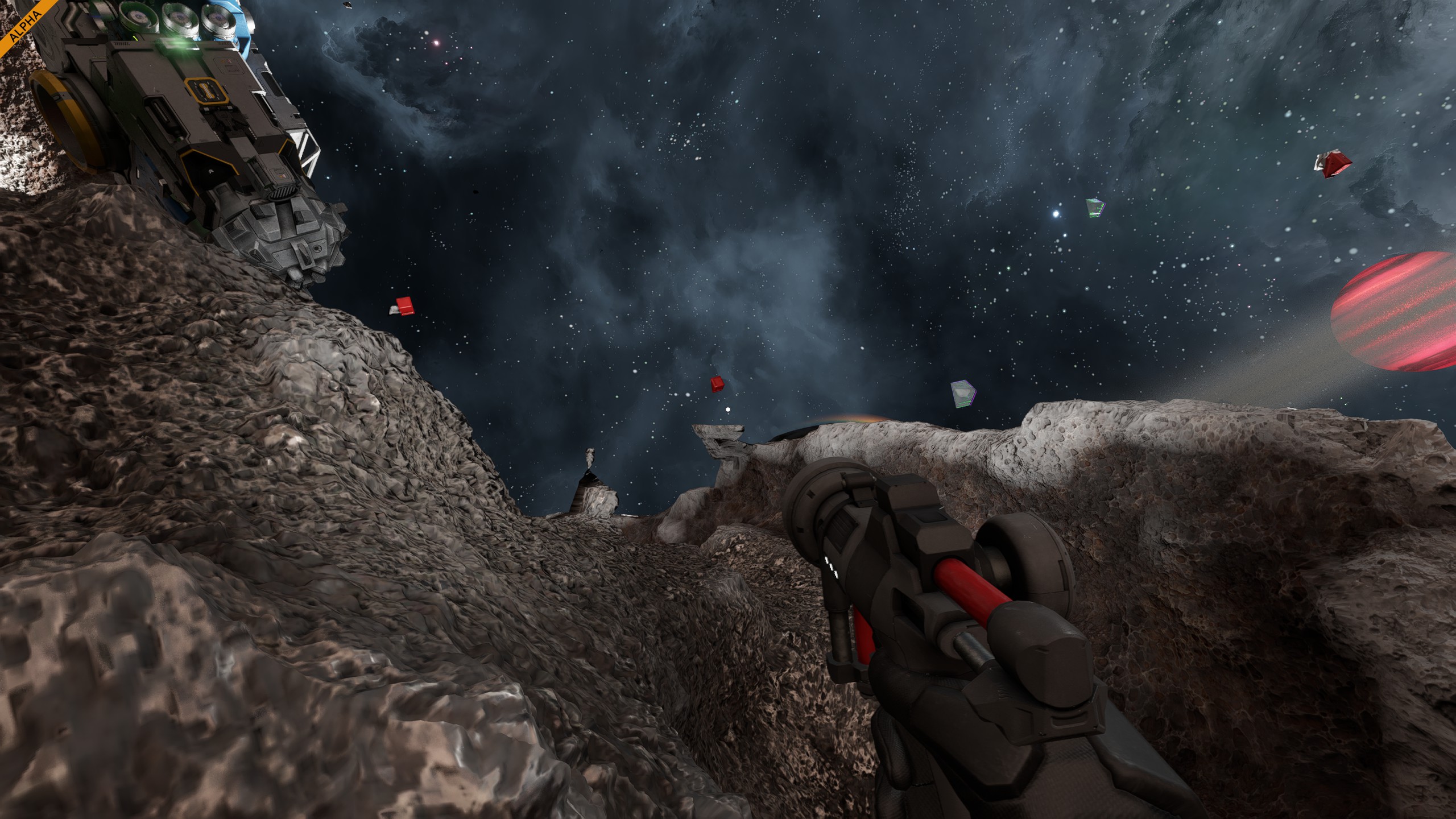
Waow! i was just starting to made the exact same post.
Those tiny flying voxel, once under a certain volume should be turn in pickable rock. it's nonsense that a so smal piece can prevent your ship to go forward. They are many, and often smaller than a detail block (for those i dont't have weld the block, they are inside)
As a possible alternative to this, if the drills still worked even if there isn't a voxel directly in the targeted path. In this case, It would still operate, and destroy a designated volume of voxels, even if you are aiming at nothing. This would allow multiple intuitive operations.
One such in relation to OP is that simply pointing Near a dangling floating voxel would still be able to mine it.
Another would be in road or flat floor mining, would allow you to mine Just a Tad off the floor by aiming the drill at a Set height, instead of needing to make a giant pit to get that last little bump.
As a possible alternative to this, if the drills still worked even if there isn't a voxel directly in the targeted path. In this case, It would still operate, and destroy a designated volume of voxels, even if you are aiming at nothing. This would allow multiple intuitive operations.
One such in relation to OP is that simply pointing Near a dangling floating voxel would still be able to mine it.
Another would be in road or flat floor mining, would allow you to mine Just a Tad off the floor by aiming the drill at a Set height, instead of needing to make a giant pit to get that last little bump.
the best argument for this is that if the number of floating voxels which are converted to lootable ore stacks exceeds the current number of free floating masses/ unpowered grid blocks/ whatever catagory it falls under... the sweeper can just remove it at the very start of the worlds build phase. there. jobs done, all at once. as part of the game loading.
the best argument for this is that if the number of floating voxels which are converted to lootable ore stacks exceeds the current number of free floating masses/ unpowered grid blocks/ whatever catagory it falls under... the sweeper can just remove it at the very start of the worlds build phase. there. jobs done, all at once. as part of the game loading.
I think the game engine could handle it fine, if you limited the check to only within, say, 5 meters of the player character and only after he has used his drill. That would make it a "by request only" function and be a negligible load to the engine, plus it would feel natural to the player as the floating voxels that might get generated, disappeared already during his drilling action. If the player comes across a naturally occurred floating voxel, just triggering a drill without even aiming, would clear it.
Would work fine, I think. And those floating voxels really are annoying.
I think the game engine could handle it fine, if you limited the check to only within, say, 5 meters of the player character and only after he has used his drill. That would make it a "by request only" function and be a negligible load to the engine, plus it would feel natural to the player as the floating voxels that might get generated, disappeared already during his drilling action. If the player comes across a naturally occurred floating voxel, just triggering a drill without even aiming, would clear it.
Would work fine, I think. And those floating voxels really are annoying.
Replies have been locked on this page!