


This object is in archive!

Active Landing Gear [IDEA]
Not Enough Votes
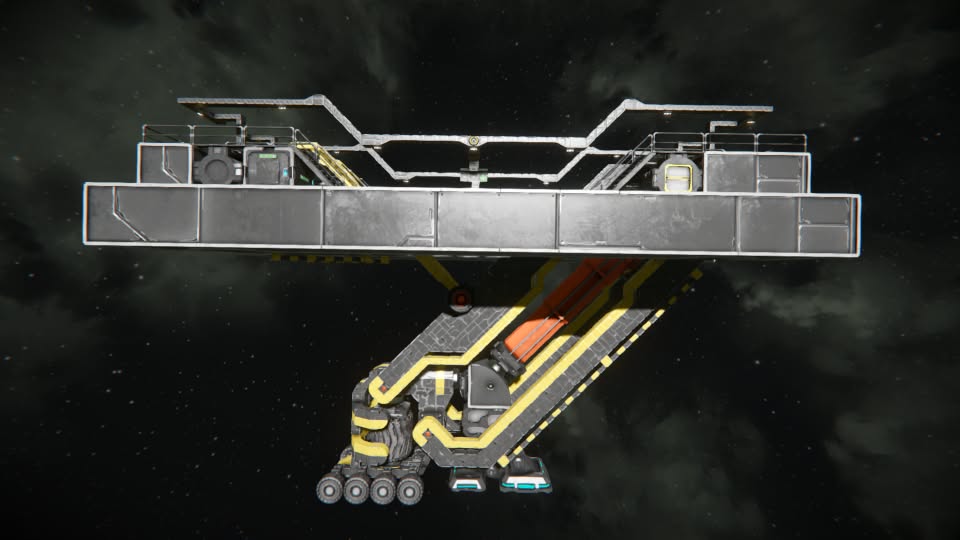
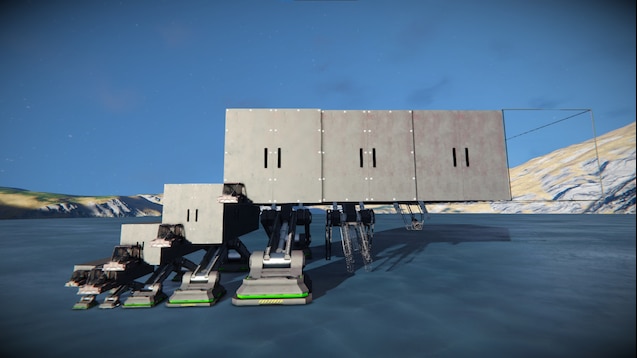
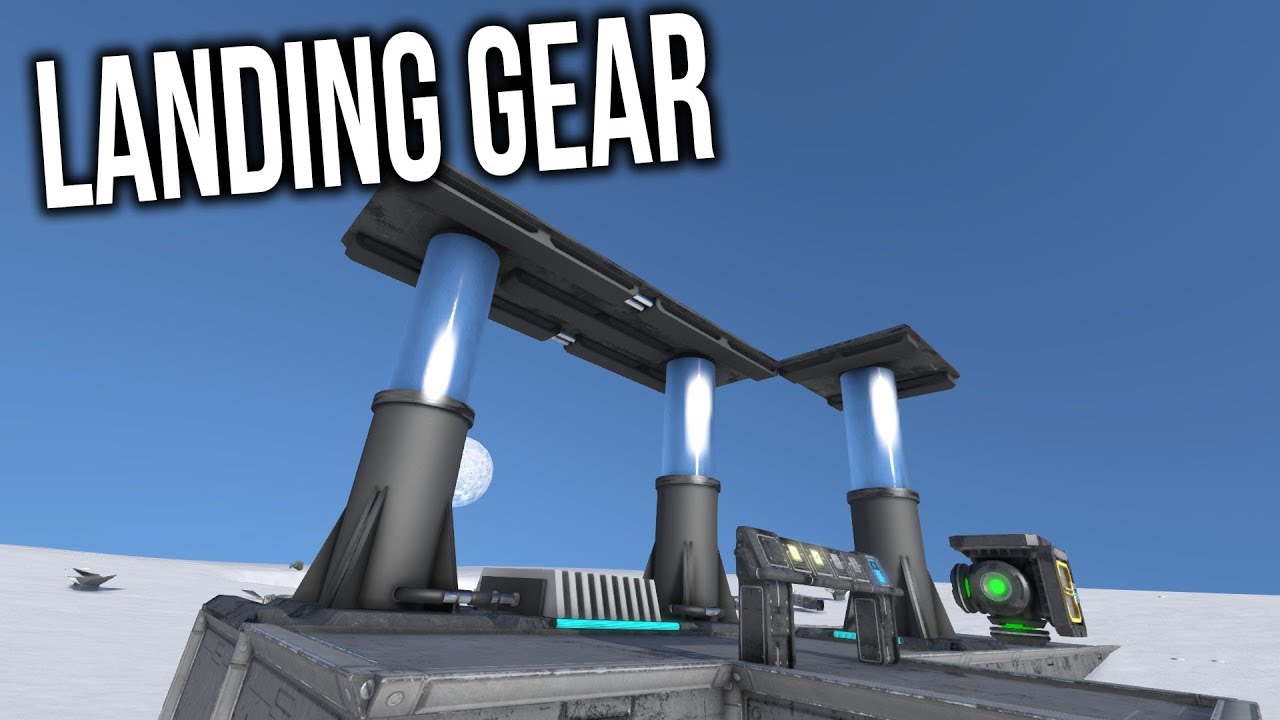
Landing Gear blocks that use a similar active movement and adjustable settings to wheels. I know that the engine can handle suspension of that sort, and landing gear with adjustable strength and height would be good for making both retractable landing gear, and landing more level on hill terrain.
Attached below are images for ideas on this topic.
 I like this feedback
An additional point that wasn't mentioned ---
Mechanical Suspension & Compliance System When we look at mechanical blocks in Space Engineers 2—pistons, rotors, hinges—they currently behave as rigid, perfectly driven components. They extend, retract, and rotate with set limits and speeds, but they do not meaningfully respond to external forces.
To make mechanical systems feel more physical, more reliable, and more useful in real engineering applications, these blocks should support a suspension and compliance system.
The goal is to allow mechanical assemblies to absorb force, react to weight, and behave like real structures under load, rather than acting as perfectly rigid joints.
Core Concept Mechanical blocks gain an optional compliance mode that introduces spring and damping behavior into their movement.
When enabled, the block no longer tries to hold a perfectly fixed position. Instead, it behaves like a constrained spring system that can compress, extend, or deflect slightly under force.
This allows constructs like landing gear, vehicle suspension, stabilizers, docking arms, and articulated machinery to behave naturally under load.
System Components 1. Spring Mode Toggle Each supported mechanical block (piston, rotor, hinge) includes a toggleable Spring Mode.
When disabled, the block behaves exactly as it does now.
When enabled, additional tuning parameters become available, and the block transitions from rigid actuation to compliant behavior.
2. Stiffness (Spring Strength) This setting determines how strongly the block resists displacement from its target position.
High stiffness:
Low stiffness:
This effectively defines how “soft” or “hard” the system behaves.
3. Damping (Shock Absorption) Damping controls how the system responds to motion and oscillation.
Low damping:
High damping:
This is critical for preventing instability and making systems feel grounded rather than jittery.
4. Target Position (Rest State) Even in spring mode, the block maintains a target position within its limits.
Instead of locking to this position, the block attempts to return to it using spring force.
For example:
This creates a true equilibrium point rather than a fixed constraint.
5. Force Interaction Mechanical blocks in compliance mode respond directly to:
This means a piston used as landing gear will compress under the weight of the ship, and compress further on touchdown depending on velocity.
Behavior by Block Type Pistons Pistons become linear suspension elements.
Use cases:
A piston under load will compress along its axis, rather than transmitting all force directly into the grid.
Rotors Rotors gain torsional compliance.
Use cases:
Instead of locking perfectly, the rotor can “give” slightly under torque.
Hinges Hinges behave like angular springs.
Use cases:
This enables more realistic articulated systems.
Practical Example: Retractable Landing Gear A piston is used as a landing strut with defined extension limits.
With spring mode enabled:
An additional point that wasn't mentioned ---
Mechanical Suspension & Compliance System When we look at mechanical blocks in Space Engineers 2—pistons, rotors, hinges—they currently behave as rigid, perfectly driven components. They extend, retract, and rotate with set limits and speeds, but they do not meaningfully respond to external forces.
To make mechanical systems feel more physical, more reliable, and more useful in real engineering applications, these blocks should support a suspension and compliance system.
The goal is to allow mechanical assemblies to absorb force, react to weight, and behave like real structures under load, rather than acting as perfectly rigid joints.
Core Concept Mechanical blocks gain an optional compliance mode that introduces spring and damping behavior into their movement.
When enabled, the block no longer tries to hold a perfectly fixed position. Instead, it behaves like a constrained spring system that can compress, extend, or deflect slightly under force.
This allows constructs like landing gear, vehicle suspension, stabilizers, docking arms, and articulated machinery to behave naturally under load.
System Components 1. Spring Mode Toggle Each supported mechanical block (piston, rotor, hinge) includes a toggleable Spring Mode.
When disabled, the block behaves exactly as it does now.
When enabled, additional tuning parameters become available, and the block transitions from rigid actuation to compliant behavior.
2. Stiffness (Spring Strength) This setting determines how strongly the block resists displacement from its target position.
High stiffness:
Low stiffness:
This effectively defines how “soft” or “hard” the system behaves.
3. Damping (Shock Absorption) Damping controls how the system responds to motion and oscillation.
Low damping:
High damping:
This is critical for preventing instability and making systems feel grounded rather than jittery.
4. Target Position (Rest State) Even in spring mode, the block maintains a target position within its limits.
Instead of locking to this position, the block attempts to return to it using spring force.
For example:
This creates a true equilibrium point rather than a fixed constraint.
5. Force Interaction Mechanical blocks in compliance mode respond directly to:
This means a piston used as landing gear will compress under the weight of the ship, and compress further on touchdown depending on velocity.
Behavior by Block Type Pistons Pistons become linear suspension elements.
Use cases:
A piston under load will compress along its axis, rather than transmitting all force directly into the grid.
Rotors Rotors gain torsional compliance.
Use cases:
Instead of locking perfectly, the rotor can “give” slightly under torque.
Hinges Hinges behave like angular springs.
Use cases:
This enables more realistic articulated systems.
Practical Example: Retractable Landing Gear A piston is used as a landing strut with defined extension limits.
With spring mode enabled:
Replies have been locked on this page!